Have I mentioned I love my neighborhood? I think it bears repeating, I love my neighborhood. This week’s installment of Tourist Tuesday once again features a hidden gem in my own neighborhood. We live between Brighton Beach (highlighted here: https://landlshenanigans.com/2022/12/20/tourist-tuesdays-brighton-beach/) and Sheepshead Bay.
Known to be a fishing village in pre-colonial times, in the early 1900’s it had developed into a yacht club haven. The tradition of sailing and boating in the bay continues to this day.
Along the north side of the bay you’ll find a row of restaurants and fishing charters. It’s always vibrant and thrumming with life. Along the south side of the bay are ridiculously expensive homes, with the peninsula terminating in the Kingsborough Community College. A pedestrian bridge connecting these two sides of the bay was first built in 1880.
But at the top of the bay sits a beautiful and sobering tribute; a Holocaust Memorial. In the Spring and Summer the area feels almost secluded with trees and foliage forming a barrier around the memorial from the car and foot traffic surrounding it. In the late Fall and early Winter the ground plants get cut down, giving a more open view of the beautiful memorial. Conceived in 1986, the park was officially dedicated in 1997.
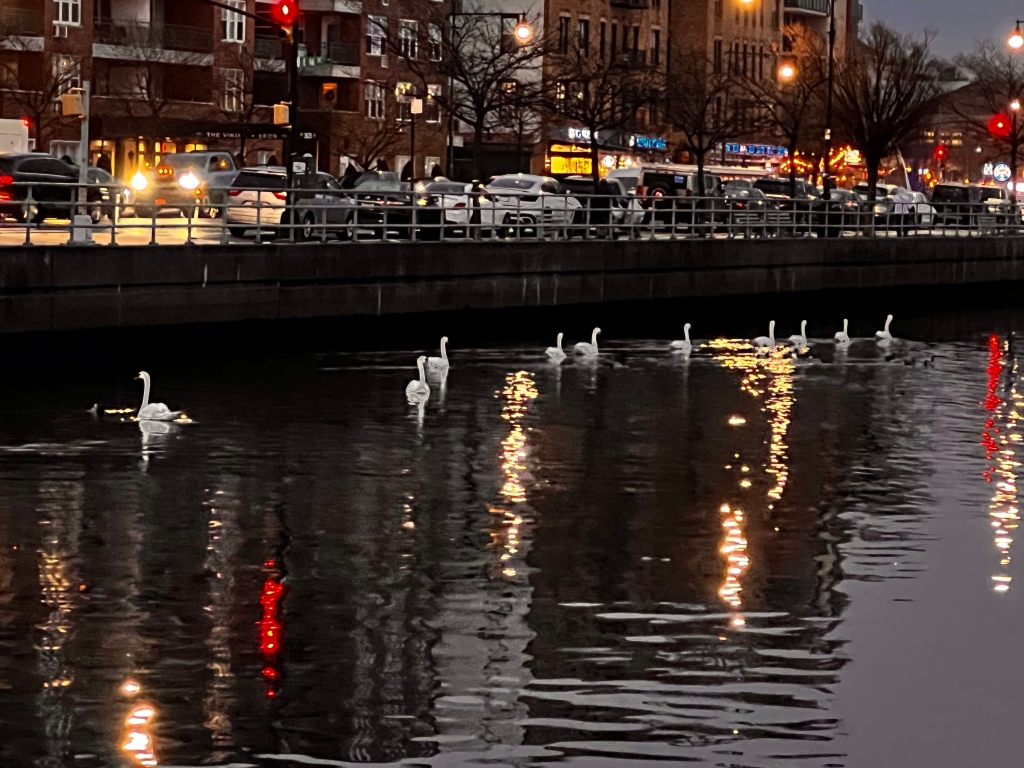
It’s worth a visit if you can make it to the neighborhood, and if you’re a bit peckish after your visit there are tons of restaurants to choose from along Emmons Avenue (burgers, bakeries, Turkish, crepes… pretty much anything you can think of). Also! There are swans in the bay! They’re beautiful and peaceful to watch.
Since I’m actually headed out of town this week, I decided to stay a little closer to home for this week’s installment of Tourist Tuesday.
So, we live between the neighborhoods of Brighton Beach and Sheepshead Bay. I love our neighborhood. It’s relatively quiet… I mean, as quiet as a New York City neighborhood gets. Our apartment is within walking distance of two train stations, the beach, grocery stores, and restaurants.
Once characterized by the New York Times as the “grumpy neighbor” of Coney Island, Brighton Beach is a small mostly Russian neighborhood (it’s also known as “Little Odessa,”) though the demographics have shifted some in recent years, with more immigrants settling from the Middle East and Asian countries.
Until 1868 the area was mostly farmland, but William A Engeman purchasable 39 lots and converted the area into a resort. By 1919 the demographics of the area had shifted such, that most in the neighborhood were first or second-generation Jewish Americans; this number only grew from the influx of Holocaust survivors that settled in the area.
In the 1980’s a new influx of immigrants began to arrive from Russia, transforming the neighborhood from a primarily Jewish neighborhood to a Russian neighborhood.
As for my visit to Brighton Beach, the beach itself is pretty quiet in the wintertime, but the scenery is no less captivating. The beach is a great place to go to escape the overcrowded city streets.
I recently read an article that designated NYC (tied with Singapore) as the most expensive city to live in… yay for winning! And seriously, a lot of things are really expensive (housing, food, fuel, tolls, parking, entertainment… I think that covers just about everything), however…, big ol’ however, there are some things you can find to do for free sometimes.
We’ve lived in NYC for almost five years (our five-year anniversary is in February) and we have never stepped foot in the Botanic Garden. Partly because time, but partly because money. It’s $18 per adult, which isn’t crazy, but I can walk to the beach for free or take the subway and visit Central Park for free… there are just a lot of free options around
People have been encouraging us to go since we got here. Well, we recently discovered that we can get “affiliate” tickets to some attractions for free with our library card through the Culture Pass. They don’t make it particularly easy, and some of them are limited to once a calendar year, but FREE! YES! And the Brooklyn Botanic Garden is one of those attractions. So you have to reserve the ticket through the library, and then you have to use that ticket to purchase a ticket from the attraction. Also, and I’m going to bold this for any of the New Yorkers that might be reading this and don’t know, the culture pass ticket will indicate that you reserve for a specific day, but you can use the tickets anytime in a 30-day period, this is a lie! You HAVE TO USE THE TICKETS ON THE SPECIFIC DAY. We learned this the hard way when we arrived and they wouldn’t honor my husband’s tickets. He had made a reservation for him and his mom on one day, and then realized we weren’t going to be able to go on that day, so when I got my ticket I booked it for the right day. So we had two tickets they wouldn’t honor and two tickets that they would. It was confusing but worked out okay in the end.
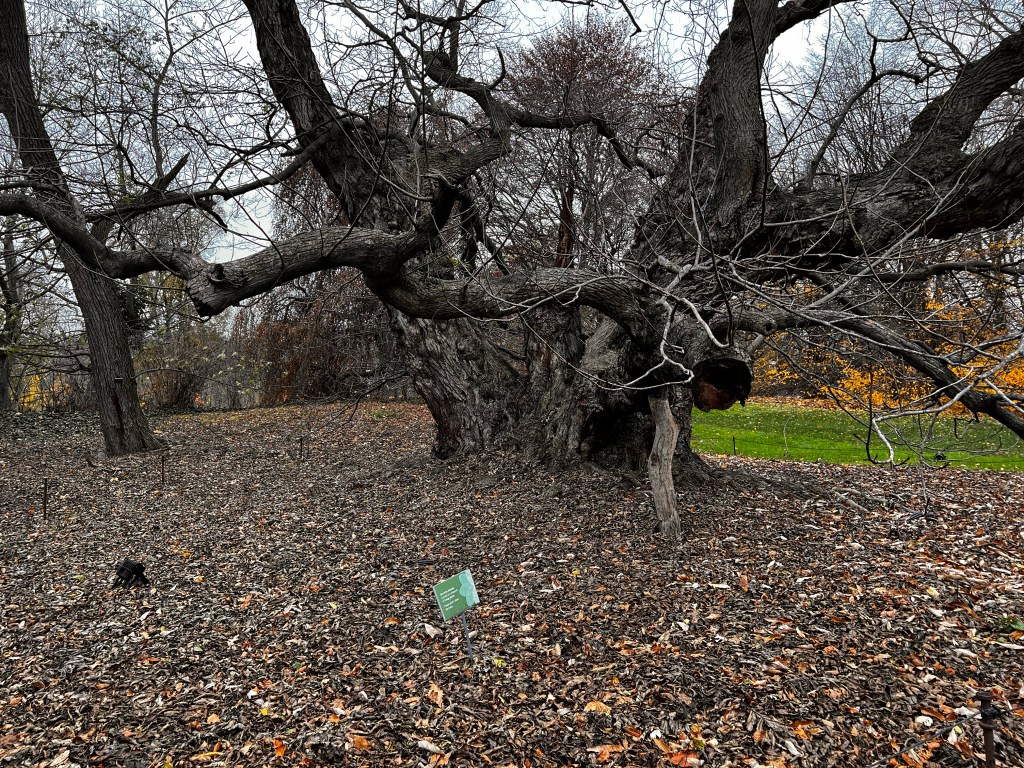
Obviously, a botanic garden is going to be more exciting in the spring and summer, and maybe the fall with the leaves changing color, but don’t let that deter you from visiting in the winter, there is still plenty of beautiful things to see in the winter (but I will for sure be back in the springtime… I want to see the cherry blossoms).
So, on a chilly, rainy Sunday morning we headed off to the Brooklyn Botanic Garden. Since it was raining and we had my mother-in-law with us we decided to drive rather than take the subway. Traffic wasn’t terrible and there is a paid parking lot right next door (shared with the Brooklyn museum). We paid just over $10 for around three hours. Which is super cheap parking in the city.
The Brooklyn Botanic Garden is comprised of 52 acres and officially opened in 1911 with native plants being the first display created.
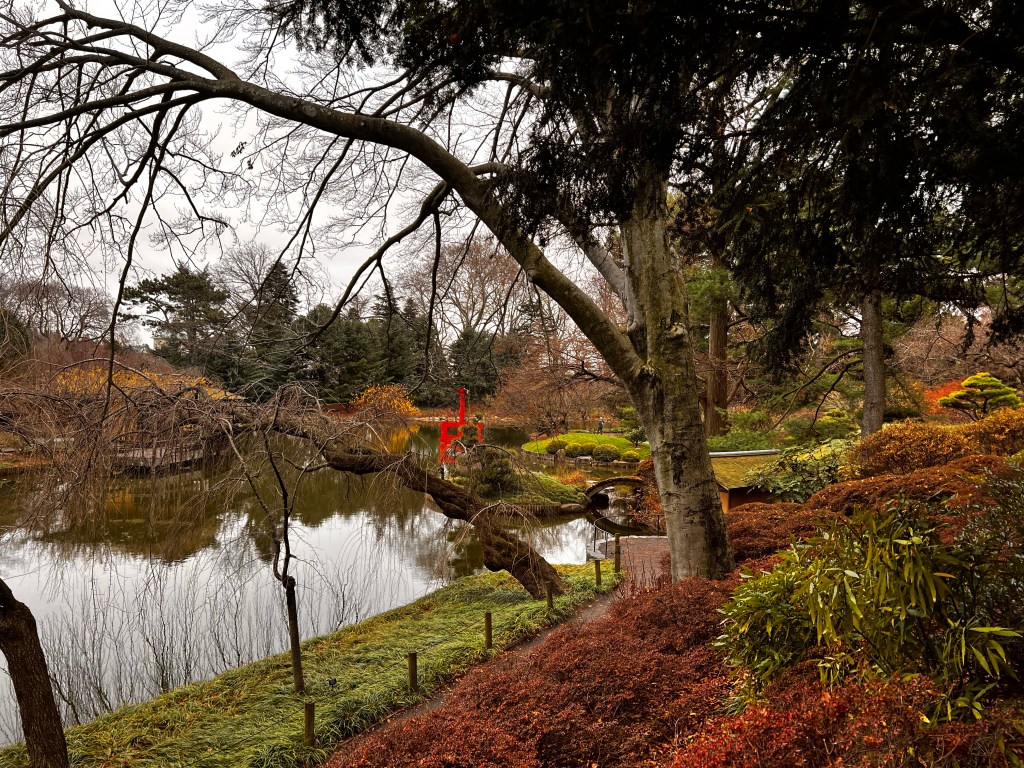
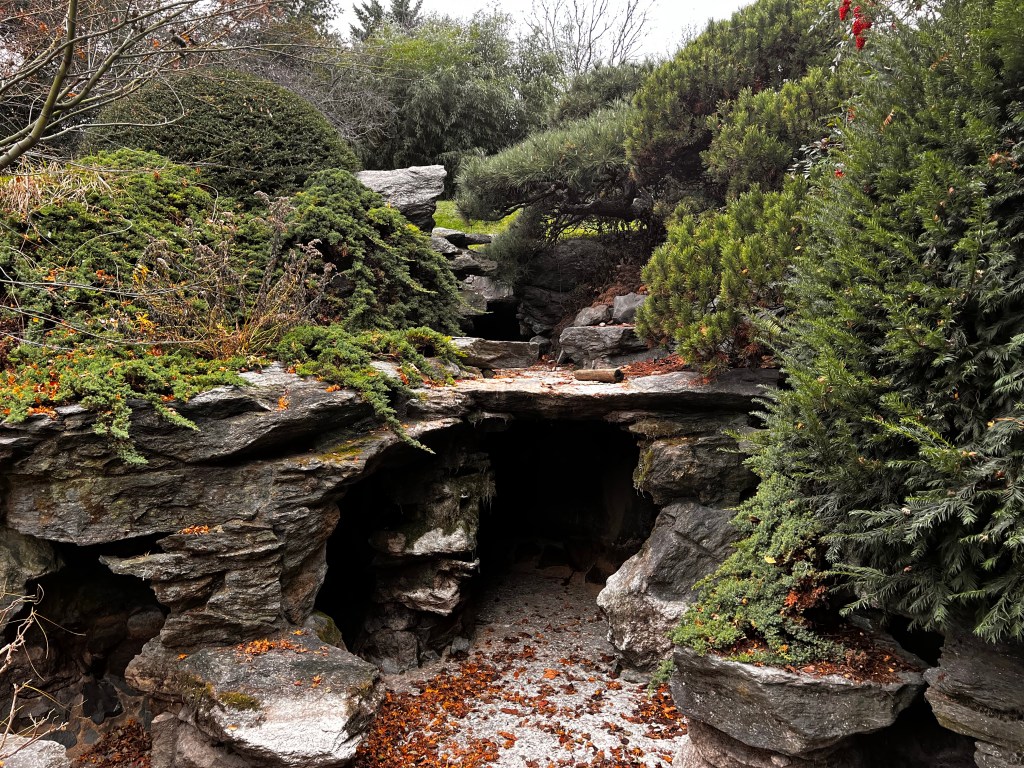
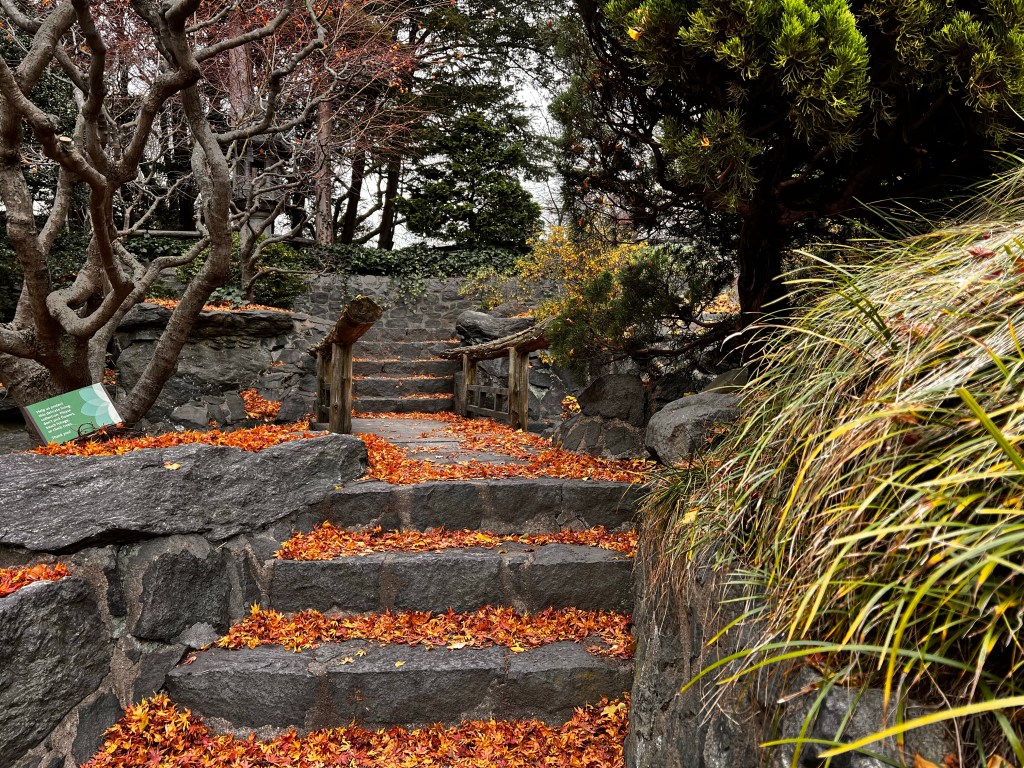
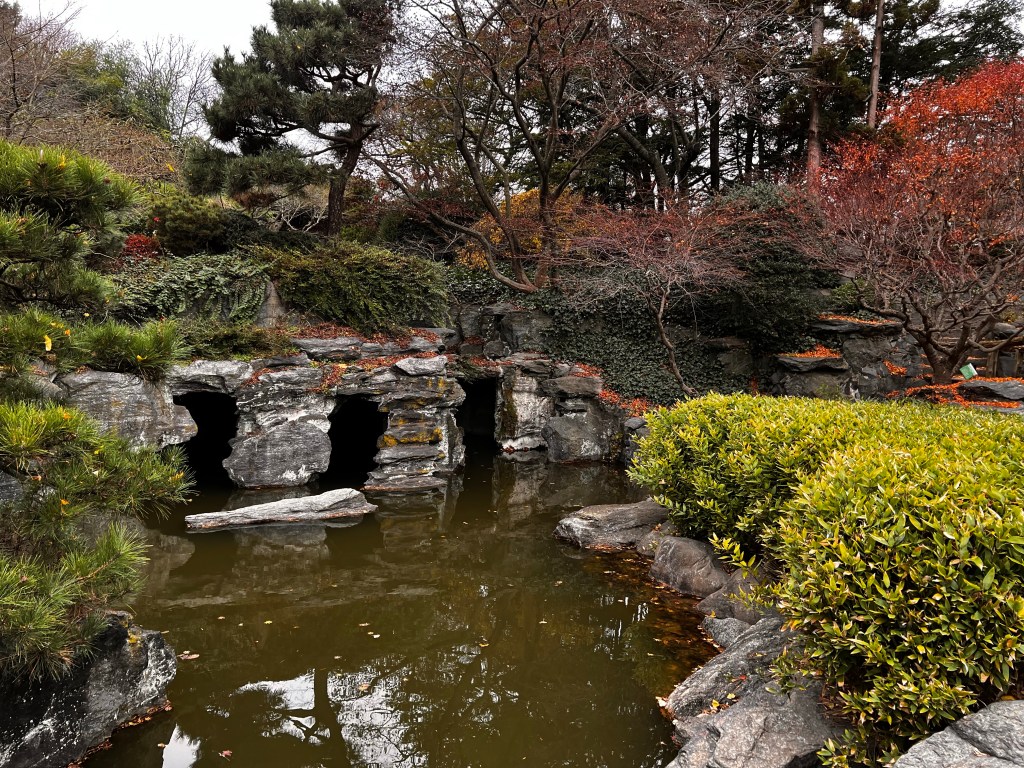
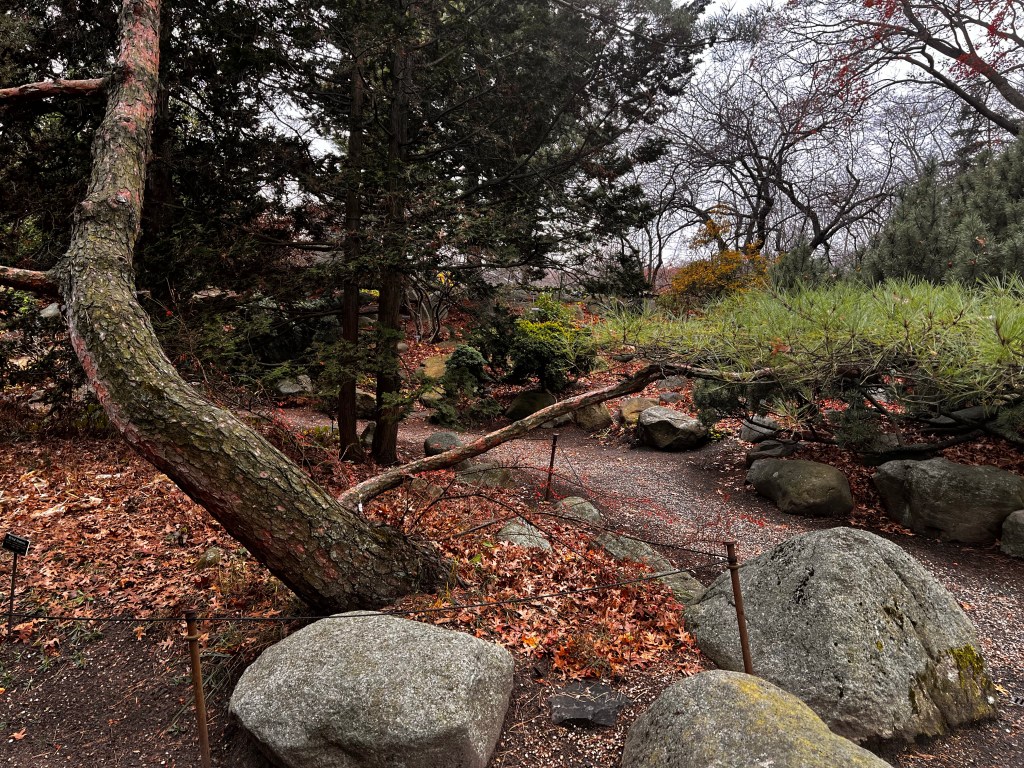
The Japanese Hill-and-Pond Garden is one of the first stops in the garden, the design was completed in 1915 making it one of the first public Japanese gardens in the U.S. (it’s one of the oldest outside of Japan), and it is a lovely, peaceful place to sit and enjoy being in nature. The area is wooded with evergreen trees (cedar trees, Japanese white pine, eastern white pine, Japanese red pine), and lots of maple and cherry trees.
The Cherry Esplanade was closed, and we skipped the rose garden since there aren’t any roses this time of year (seriously, I can’t wait to go back in the spring) so we walked through the Rock Garden. There were some lovely trees and lots of plants to enjoy, but I was a little disappointed in the rock portion of this garden. I love rocks, so I was hoping for a big variety, with lots of identification tags, but alas, just a few were identified, it was mostly trees and plants around some boulders.
The Herb Garden, on the other hand, was fabulous; tons of plants with descriptions along with the medicinal uses of the plants or historical origins/uses. Granted, a lot of the plants were cut down for the winter, but the identifications were still there!
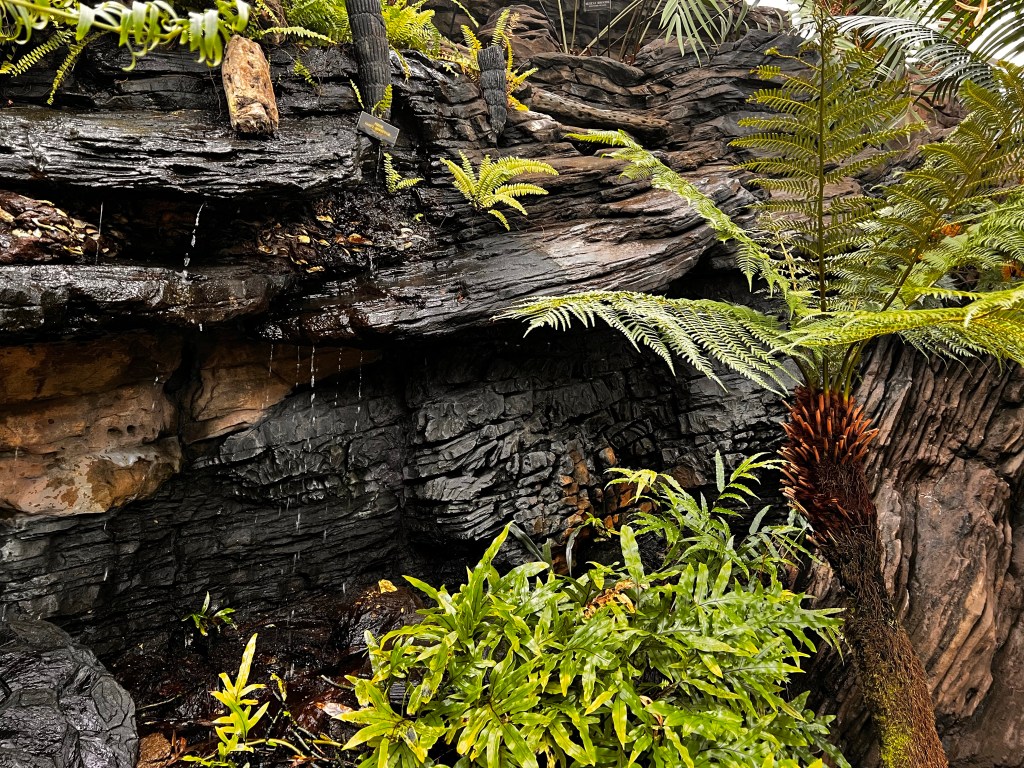
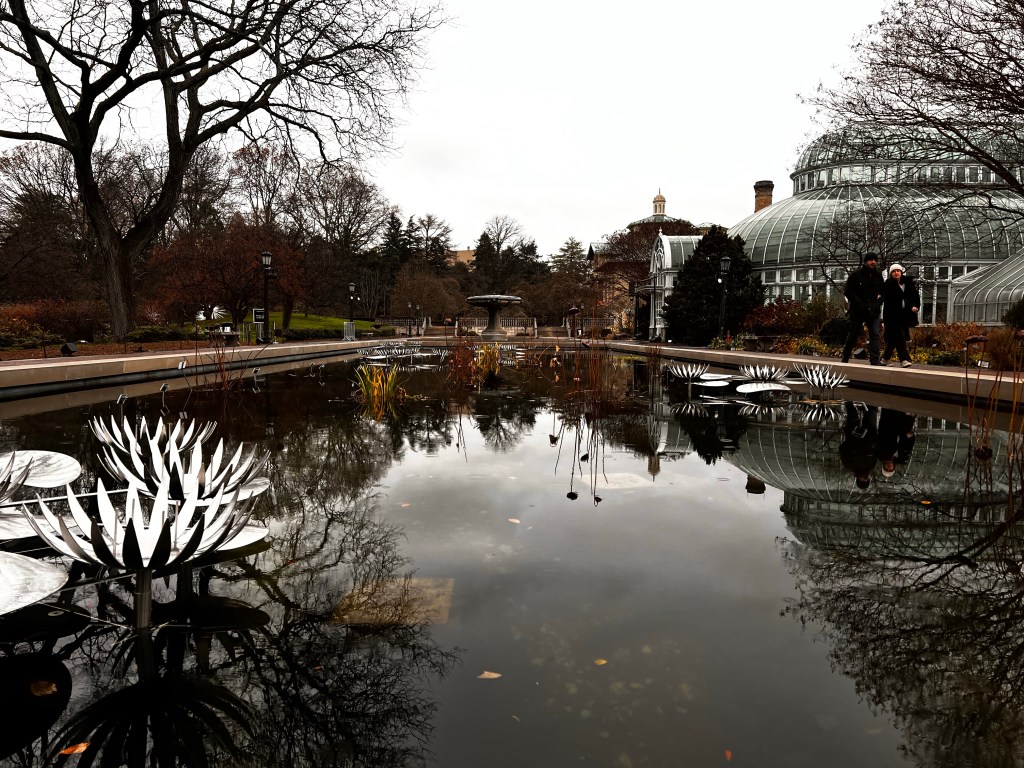
At this point, it was cold and rainy and we were in need of a bathroom break, so we cut through the Water Garden to go to the Steinhardt Conservatory. The conservatory was completed in 1988 and its collections are amazing. I feel like I’m using a lot of superlatives, but really, if you enjoy outdoor spaces or plants, it’s hard not to geek out over all the things.
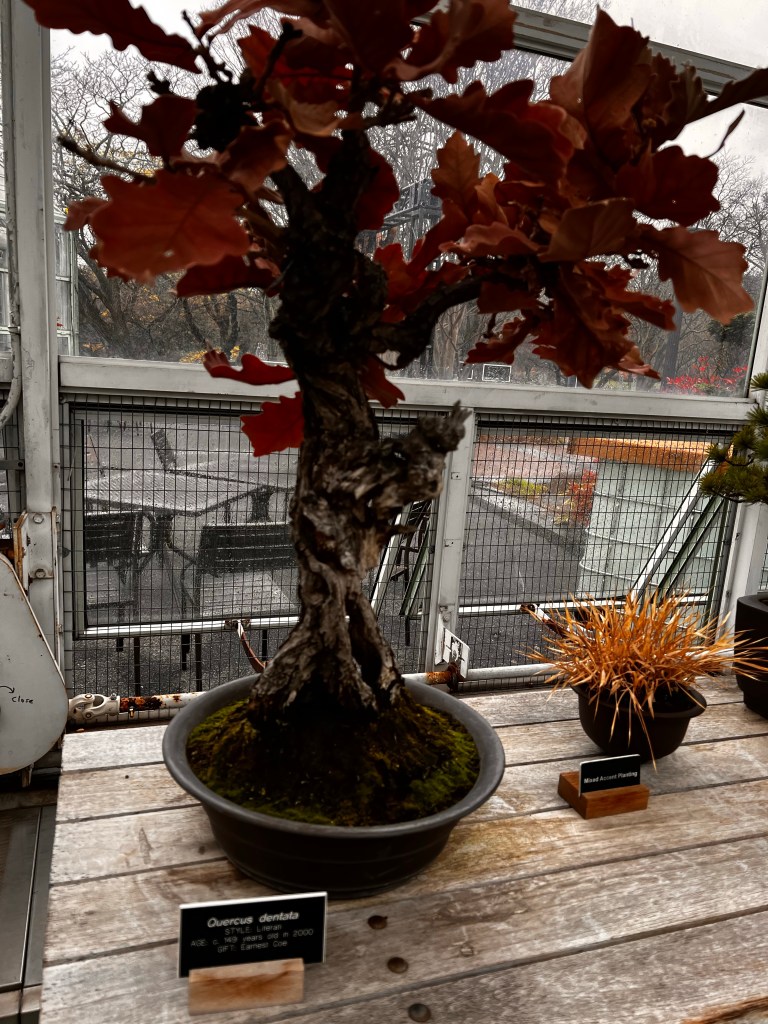
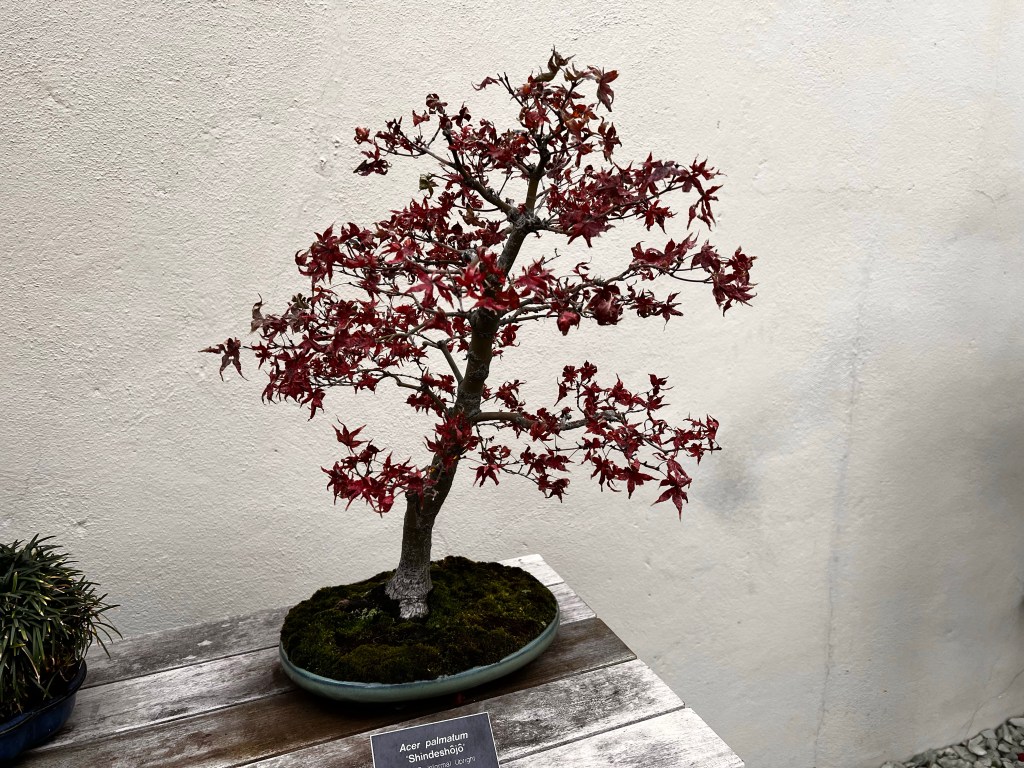
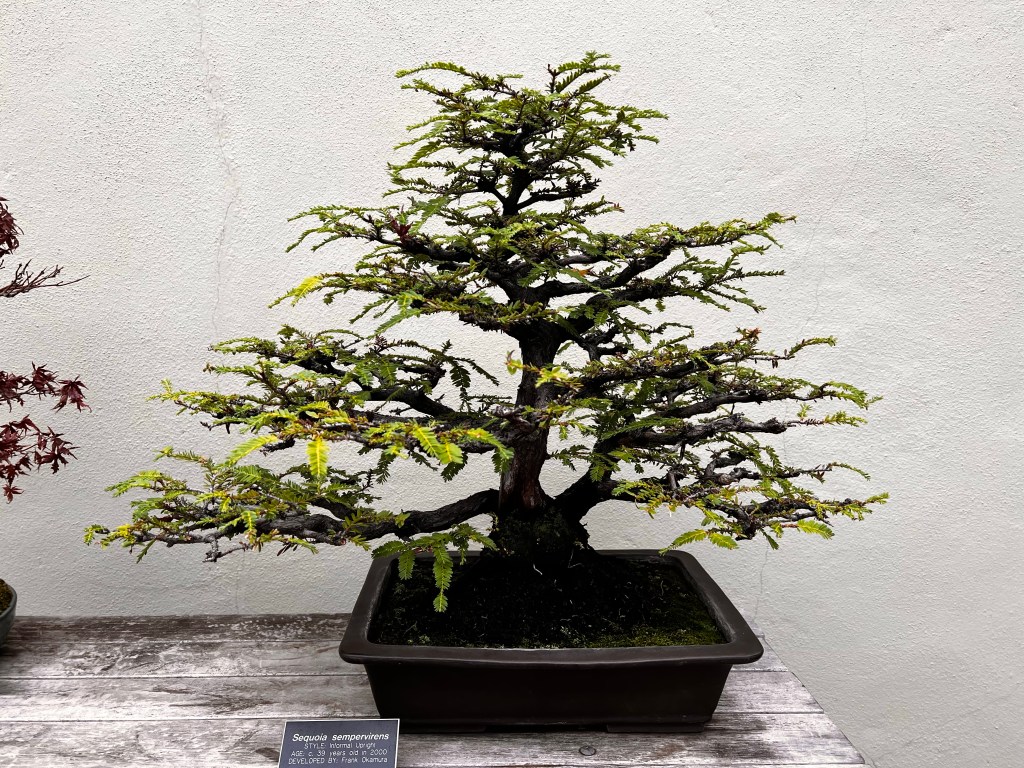
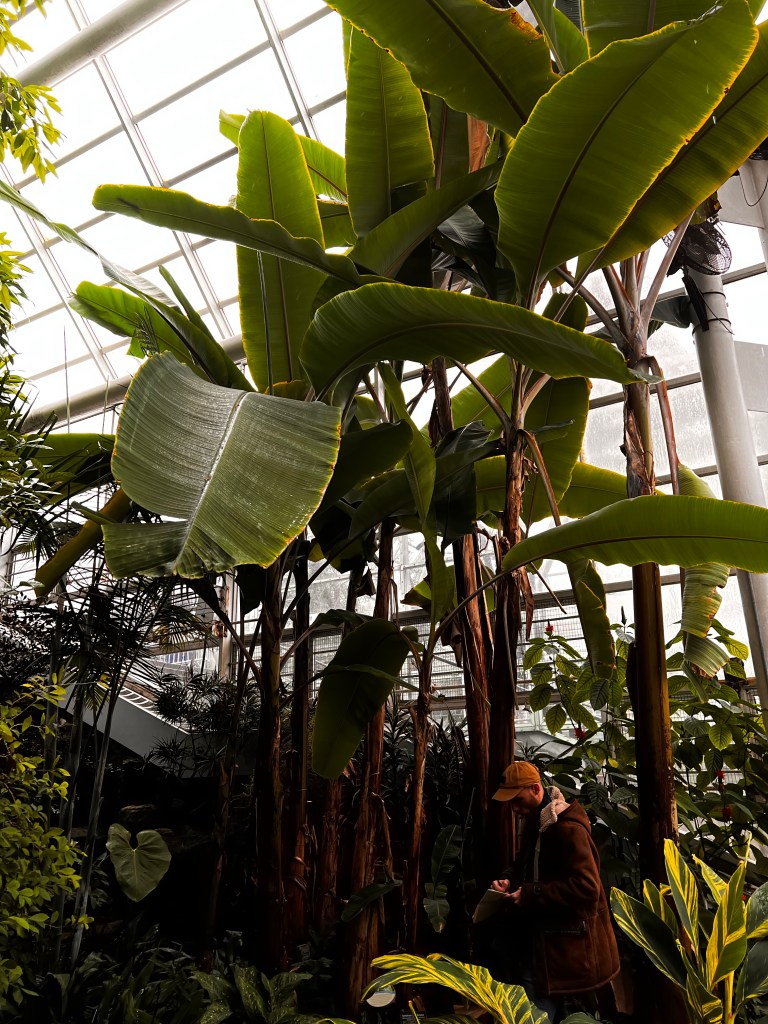
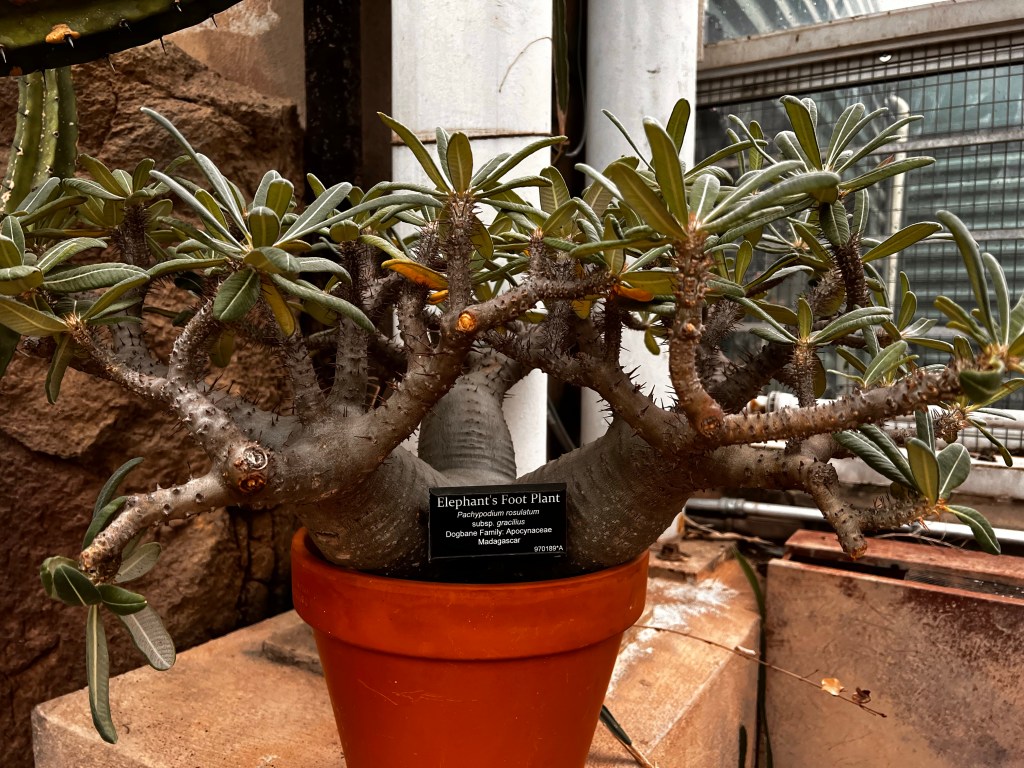
The conservatory is made up of six areas. The Trail of Plant Evolution is on the main level; the room is warm and brimming with plants from all over, including a baby Baobab tree from Africa. Baobab trees have a spot in my heart from my time in Malawi. They’re stunning majestic trees, and how they survive drought conditions is rather marvelous (they are a “stem-succulent” tree and they store water in their stems [trunks] https://nph.onlinelibrary.wiley.com/doi/full/10.1111/j.1469-8137.2005.01618.x). Also on the main level is the Bonsai Museum. I’ve been fascinated by bonsai since I was a little kid; I still have the book my mom bought me when I was ten on how to grow bonsai, it’s a cheesy book written in the 70’s, but I love it. Across from the Bonsai Museum is the Warm Temperate Pavilion… I’m not saying it was boring, but I just saw the place a day ago and I can’t really remember what the room was like.
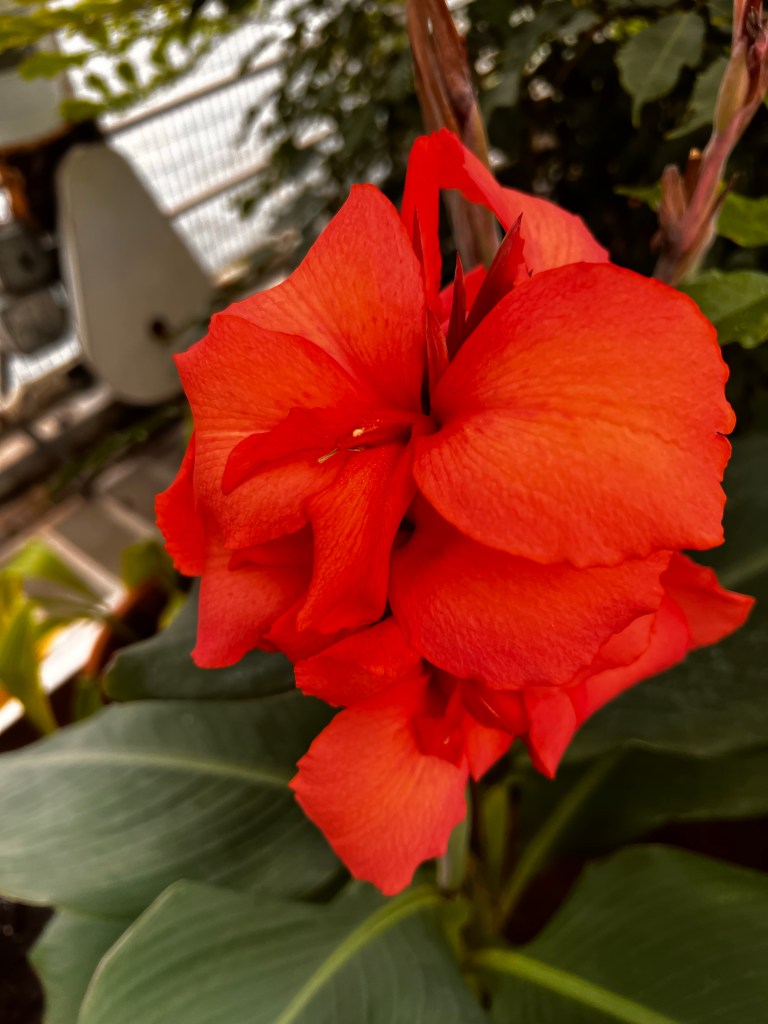
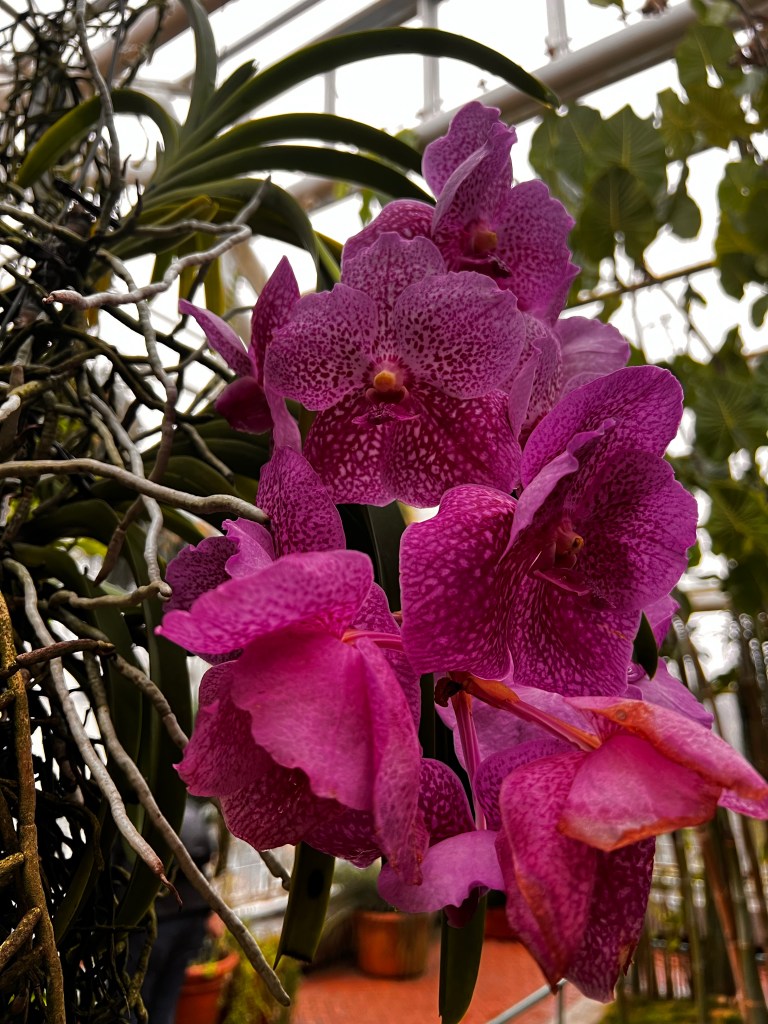
The downstairs pavilions include the Aquatic House and Orchid Collection, the Desert Pavillion, and the Tropical Pavilion. I could live in these rooms. There is something so special about being surrounded by so many plants. The air in each of the pavilions is conditioned specifically to support the plant life… humidity levels, air circulation, temperature, and the air just felt good, like you could breathe more deeply.
10/10 go visit the Brooklyn Botanic Gardens any time of year. I’ll probably post an update when I go in the spring or summer.
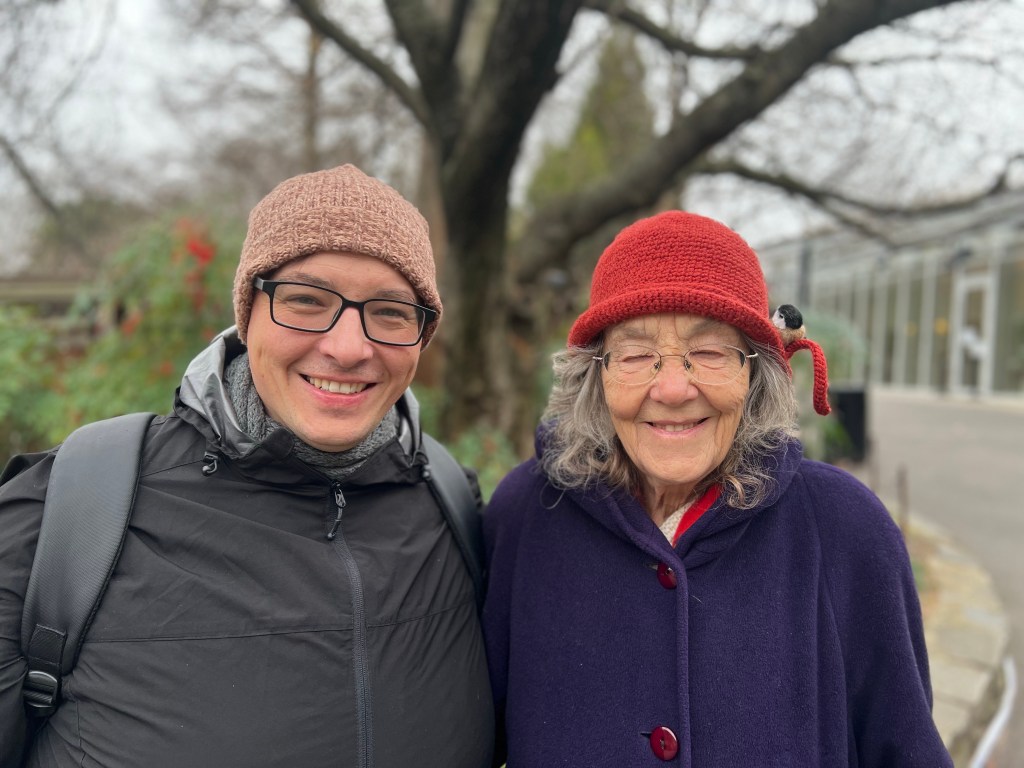
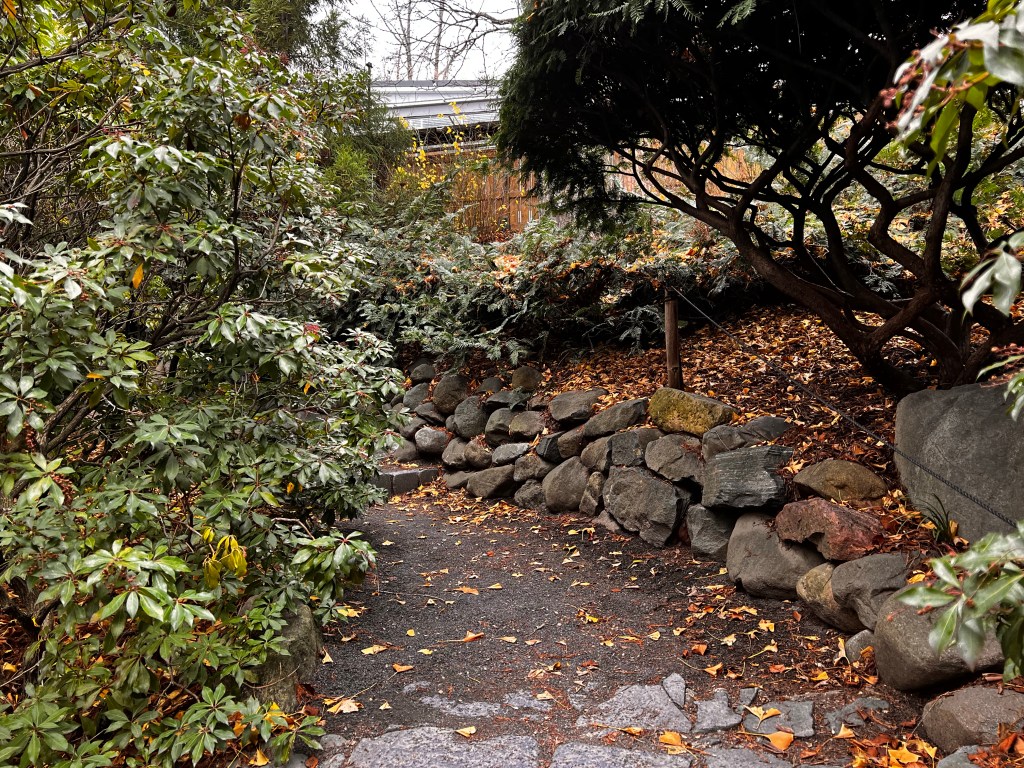
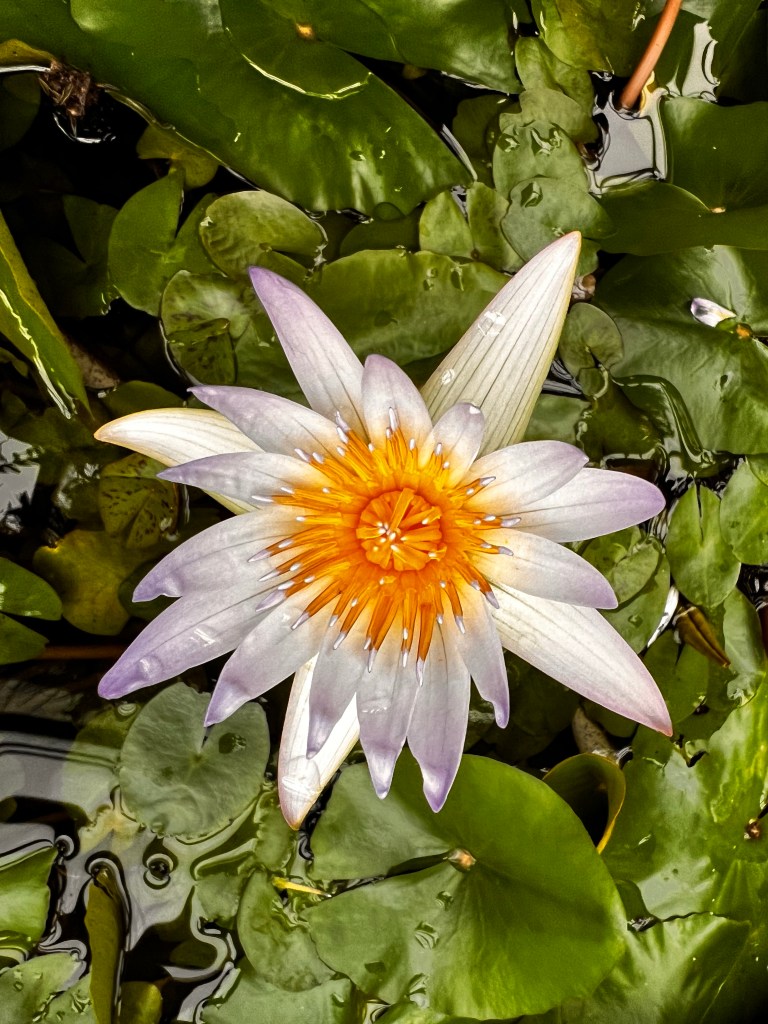
Lewis and his mom, Nancypond in the Japanese gardenPath in the Japanese GardenYellow Crane Flowera red banana tree…man at the base for scaleMexican pincushionShakespeare GardenDaubeney’s Water Lily
So, I am not a native New Yorker. I grew up in a relatively small city in Northern California (Chico https://chico.ca.us) and spent my teen years in a small suburb in Northeast Ohio (Cuyahoga Falls https://www.cityofcf.com). I’m not a country girl, but maybe country adjacent? Regardless, I am not a city girl at heart. I’m used to lawns and gardens, forests and wilderness. None of which are particularly plentiful in New York City.
That being said, I’m extraordinarily appreciative of the fact that NYC does it’s best to cultivate and utilize green spaces. Given my propensity for being outdoors, I’m sure a number of my Tourist Tuesday posts will feature one of the many beautiful parks or outdoor spaces around the city.
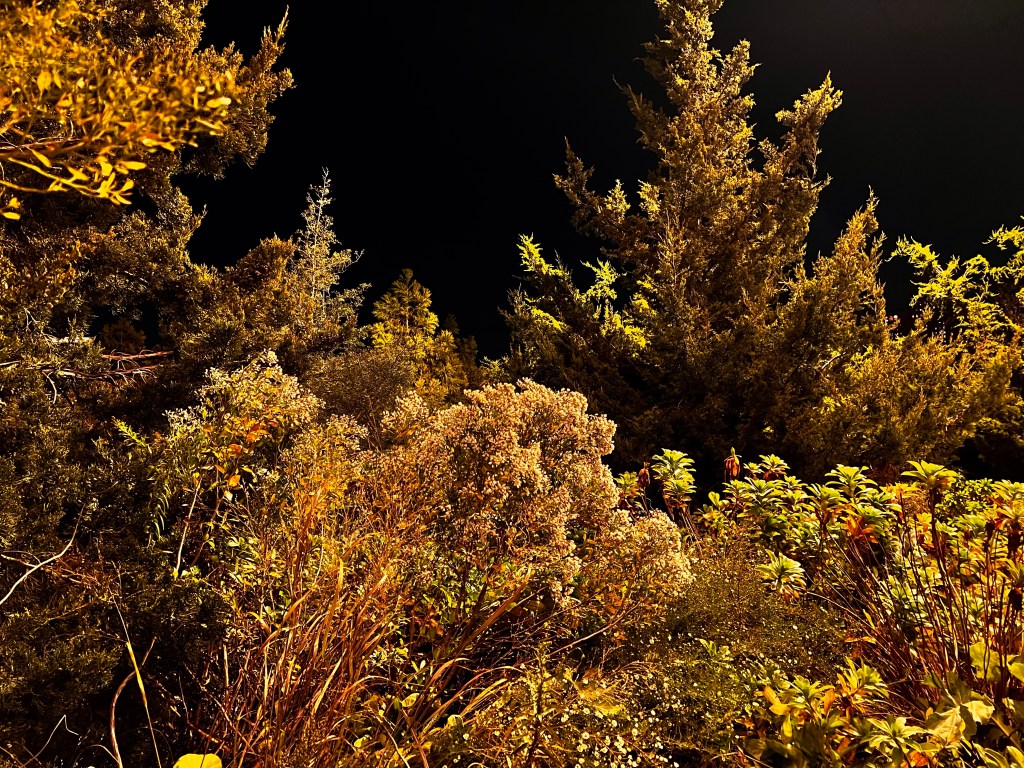
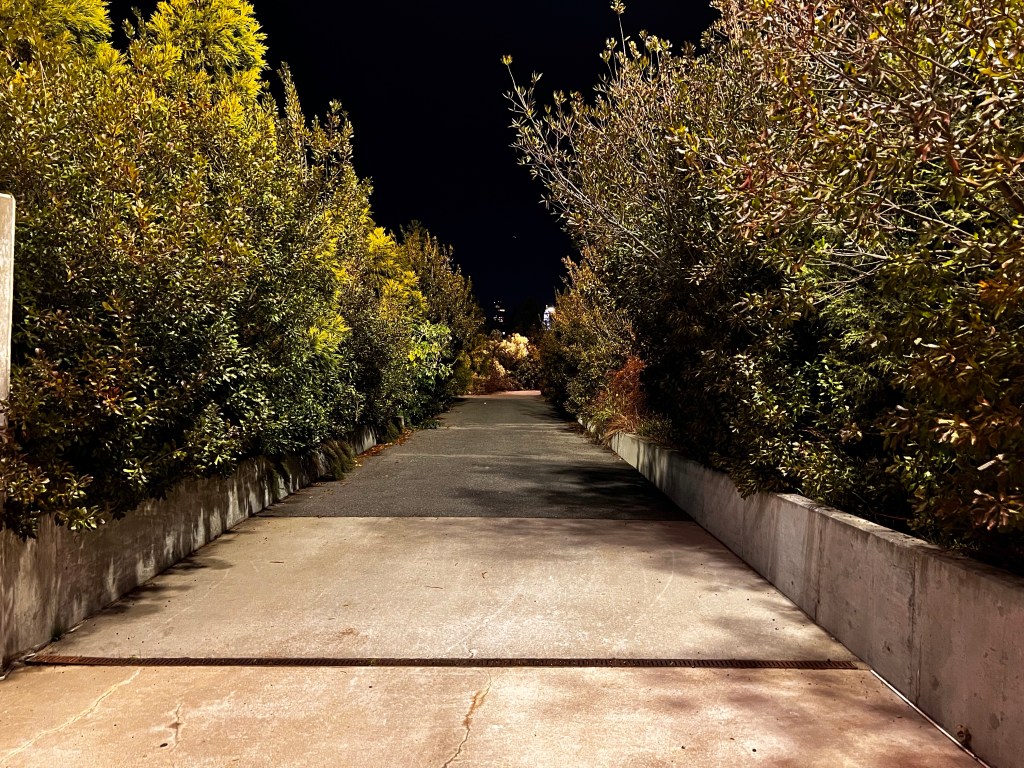
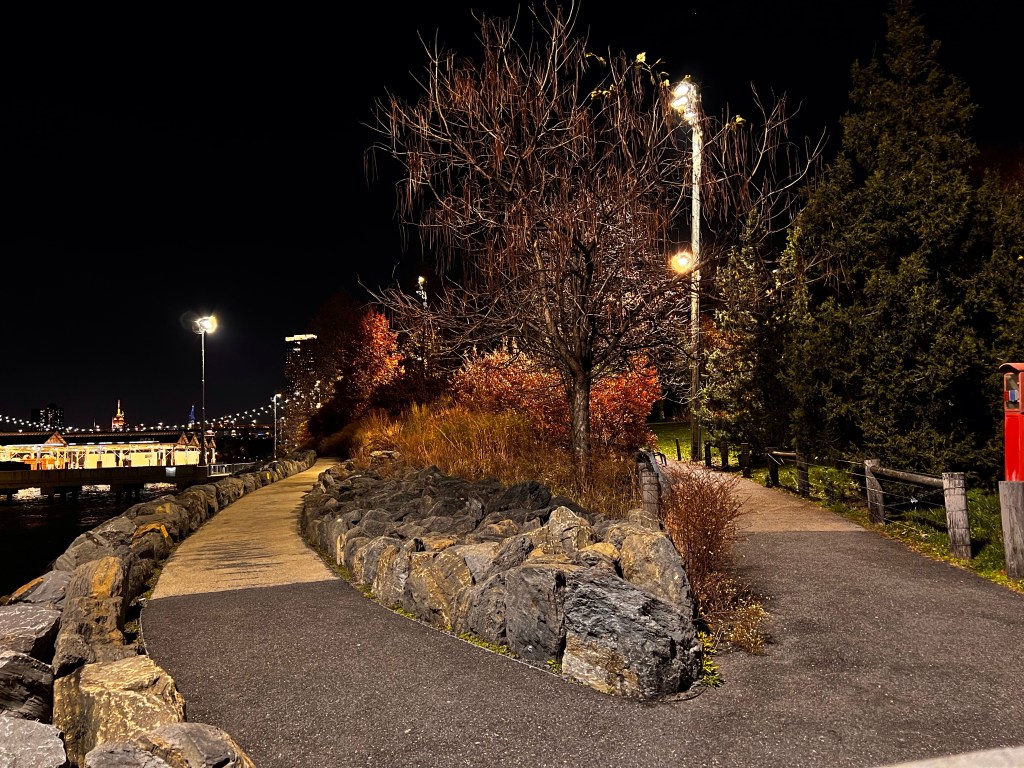
On Monday evenings (at 7:30pm) my wonderful husband broadcasts a Bible study live on YouTube (https://m.youtube.com/c/ucgnyc/live). He loves to hit the road and broadcast from outdoors. So I joined him for a trek to Brooklyn Bridge Park.
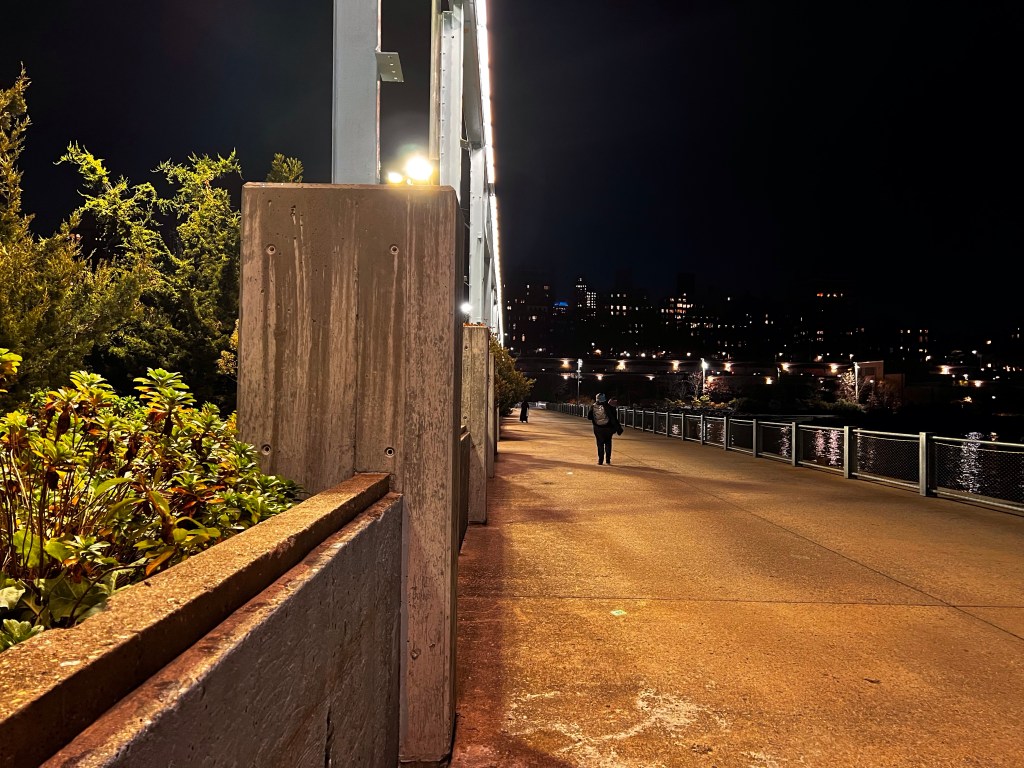
We chose to drive to the park this trip, as we can usually find parking in the colder weather months, especially in the evening. Don’t bother trying to park in the warmer months, it’s nearly impossible. You can also get to the park by subway, but be prepared for a mile or so walk once you get off the train. Also, pay attention to the hours of the different piers; some of them close earlier than others.
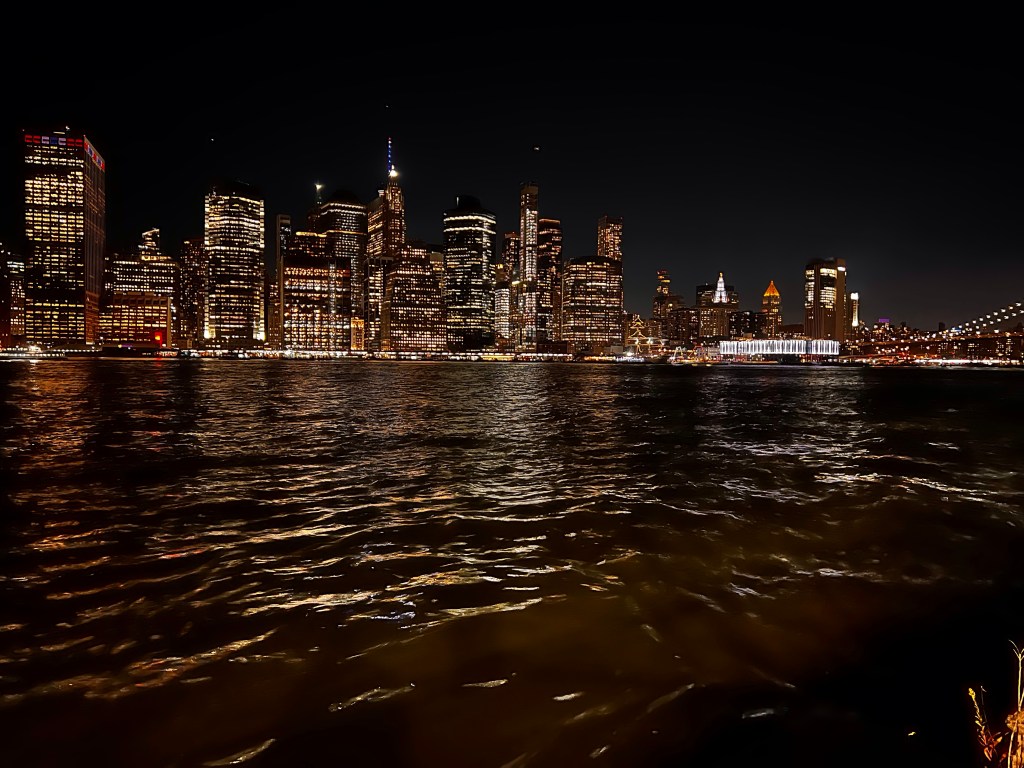
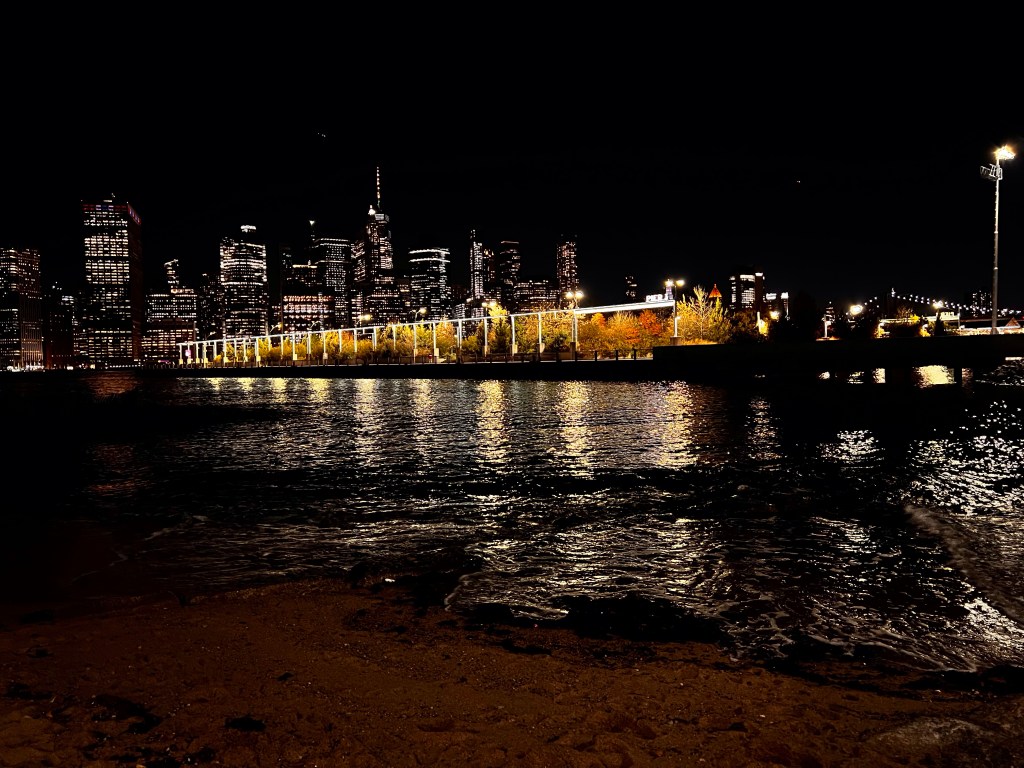
Brooklyn Bridge Park is 1.3 miles long encompassing 85 acres (!!) along the East River waterfront. Honestly, there is so much to do at this park: there are tennis courts, basketball courts, wooded areas, volleyball courts, soccer fields, running trails, ping pong tables, kayaking, pickleball, fishing, and over 120 different bird species for bird watching. But my favorite thing is the absolutely fabulous view of the Manhattan skyline and the Brooklyn Bridge.
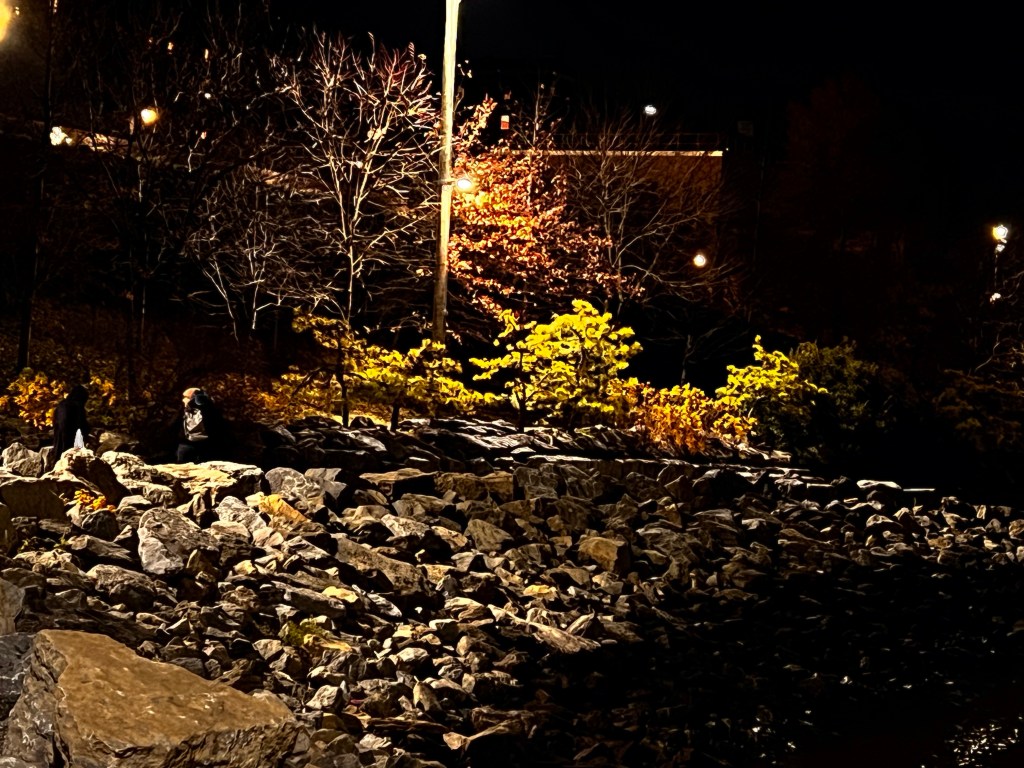
Pier Three is my favorite place to visit. It’s a wooded area with secluded grassy areas and tons of benches facing the water and the city view.
The area has gone through many different iterations since the mid-1600’s. Mostly serving as a trade route, starting with small boats and ferries, moving on to steam powered ferries in the 1800’s until railroad lines were installed in the 1850’s which lead to the construction of massive warehouses along the ferry landings and piers that jutted out from the land. Once the Brooklyn Bridge opened in 1883 the ferry trade ended and the area went through a period of neglect until the 1950’s and the construction of the BQE, which revitalized the area… for a little while. By the 1970’s the area was mostly abandoned and decrepit. In 1984 the Port Authority announced plans to sell the piers for commercial development. It wasn’t until 1998 that the planning for the Brooklyn Bridge park started in earnest, with ground being broken in February of 2008. The first pier opened to the public in 2010 with additional areas or piers opening every subsequent year until 2021 (except 2016 and 2019). You can learn more about the history of this beautiful park here: https://www.bkwaterfronthistory.org.
Manhattan SkylinePier ThreeBike lanesView of Pier three with the Manhattan skyline in the background
Okay… so there weren’t any bears… there weren’t even any moose, despite a hike in the snow to see one. It was our last full day in Alaska, and it was pretty much exactly what you would hope a day in Alaska would be!
We woke up to more cold air, but a glowing fireplace took off the chill as we solved the world’s problems. We had a relatively leisurely morning before heading out for a day of activities.
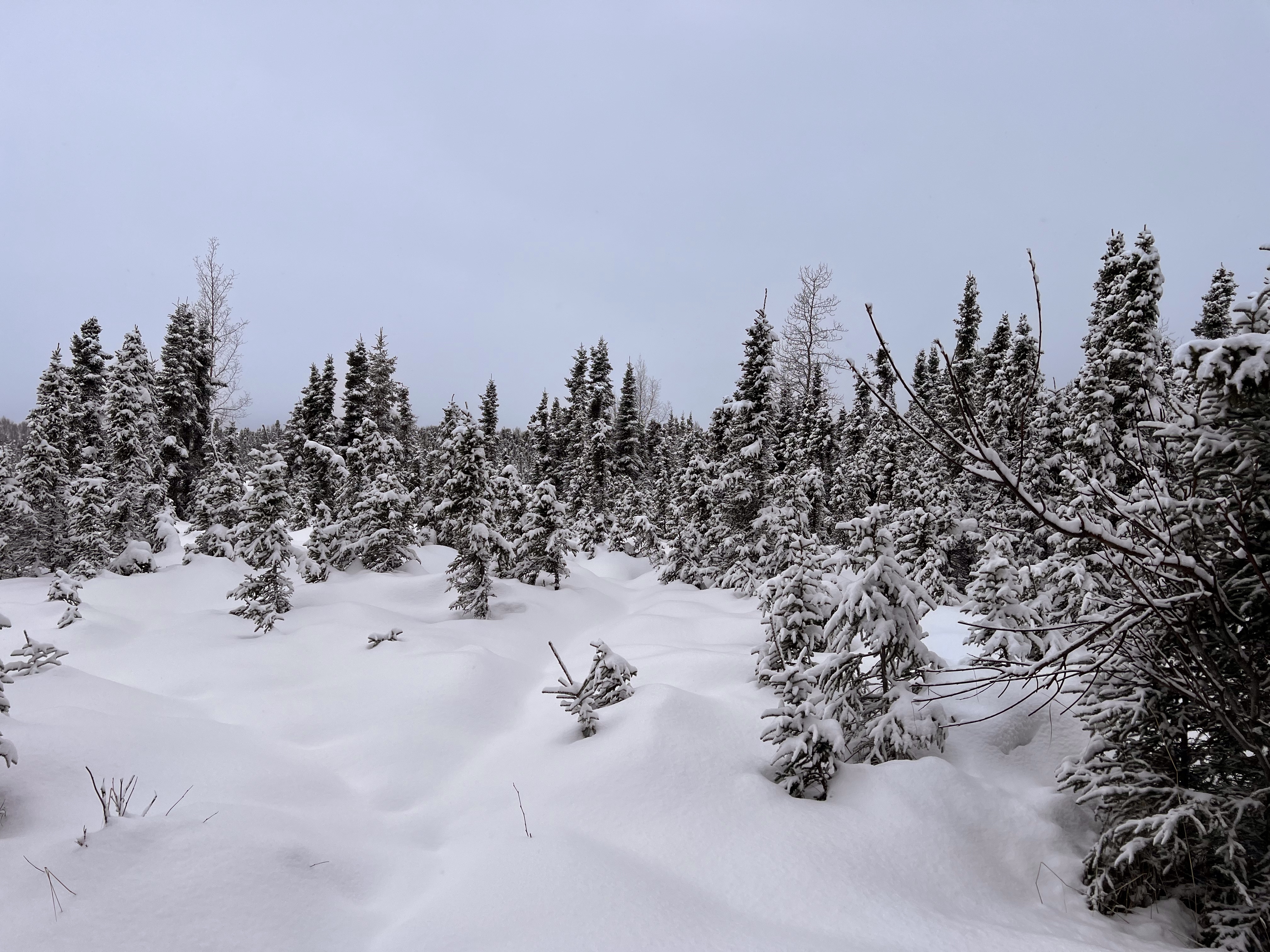
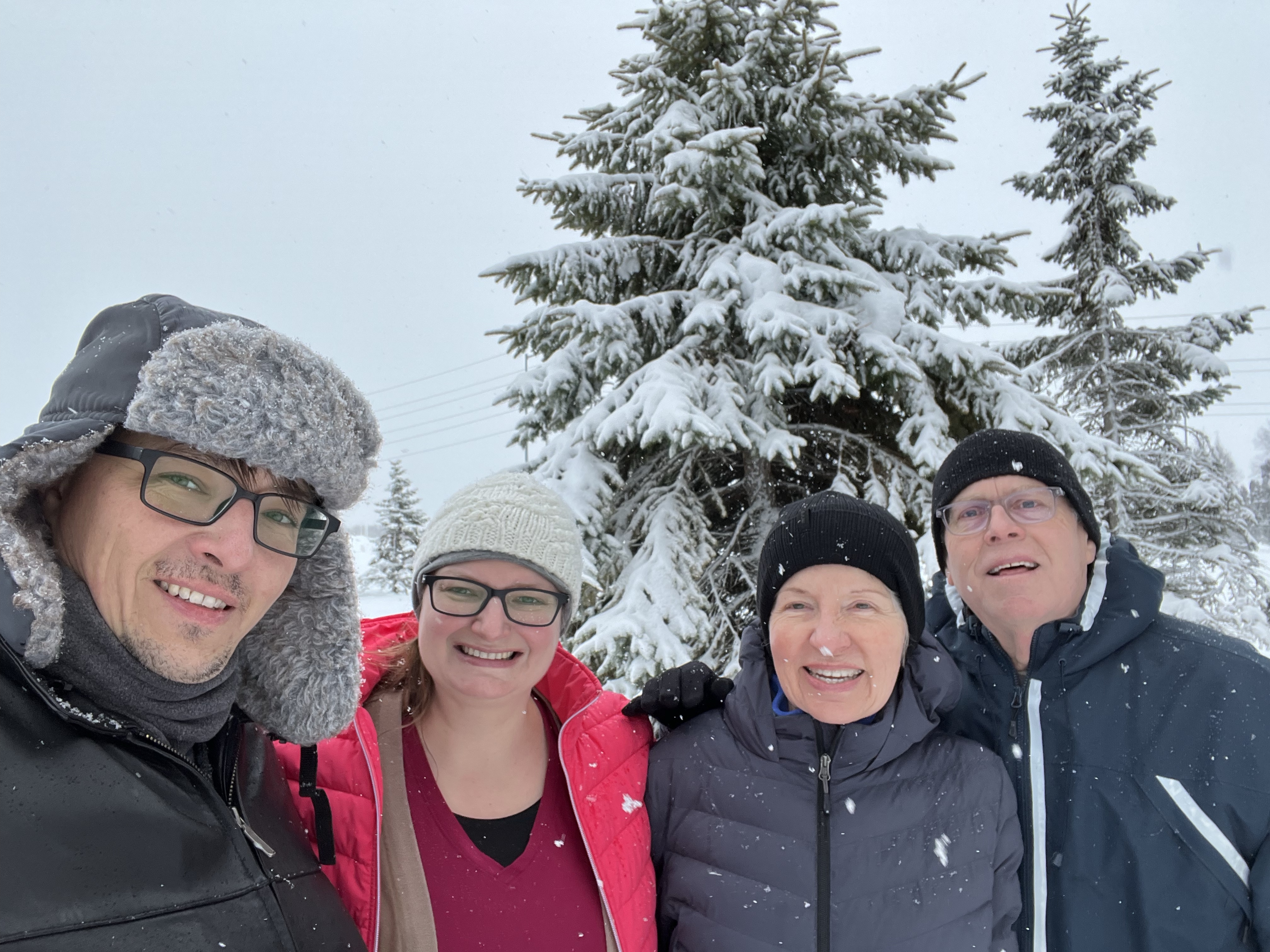
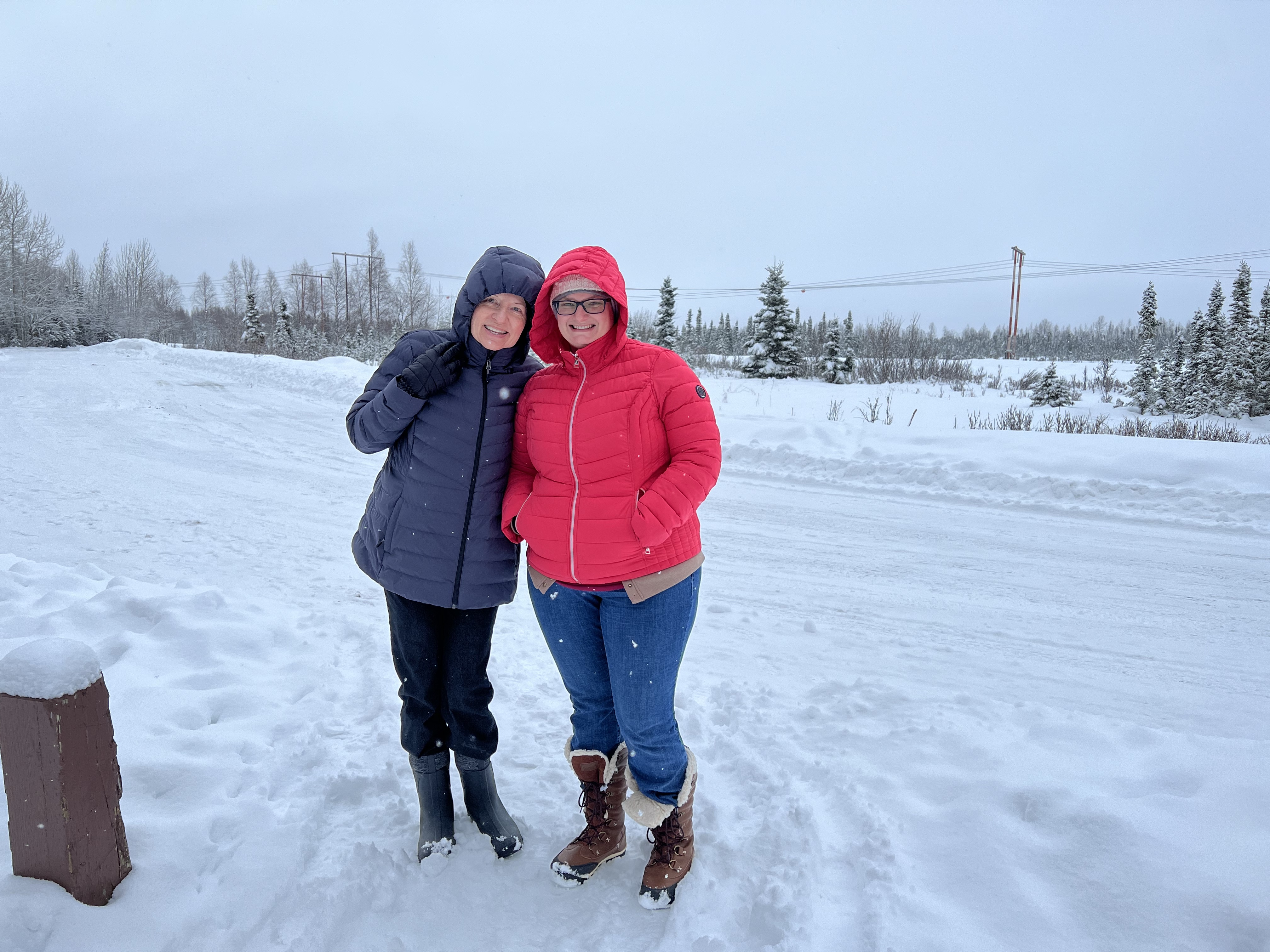
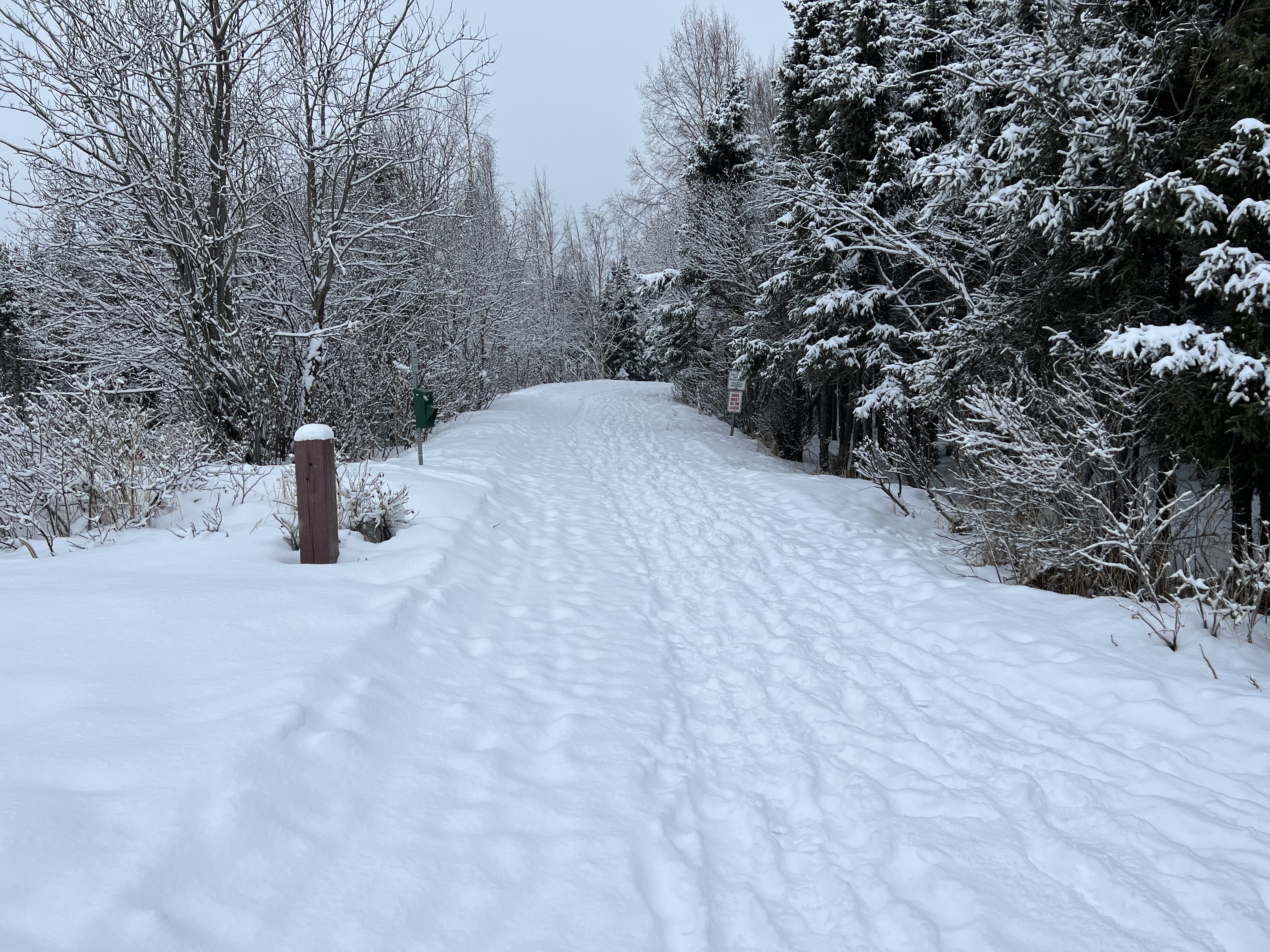
While we were chatting the snow began to fall so we layered ourselves up and took a walk through Earthquake Park in search of some moose and to enjoy the peace of falling snow. There’s nothing like the hushed air of a gently falling snow surrounded by towering trees, boughs bending under the weight of the fluffy flakes. Despite the distinct lack of moose, it was a pleasant trek.
After our walk we headed to downtown Anchorage to visit some tourist trap shops for some trinkets to carry home. I was a little disappointed to find so much of the “Alaskan” trinkets were made in China. I had to hunt to find locally made items.
After our perusal of the trinket shops we headed to the Alaska Fur Exchange. What a treat! The shop is great to visit even if you don’t need to buy any fur. The shopkeepers were knowledgeable and friendly and clearly love Alaska. I bought a bone hairpin. I asked what kind of bone it was and they said it was either moose or cow… I’m going to just go with moose. It’s adorable and I love my reminder of our time in Alaska.
On our way home from our excursions we happened upon a young man with his car stuck in the snow. We hurried home to get some gravel and towels to put under his tires and drove back to help push him out. There’s something immediate and gratifying about helping someone stuck in the snow. You get nothing in return, but the knowledge that you helped someone out.
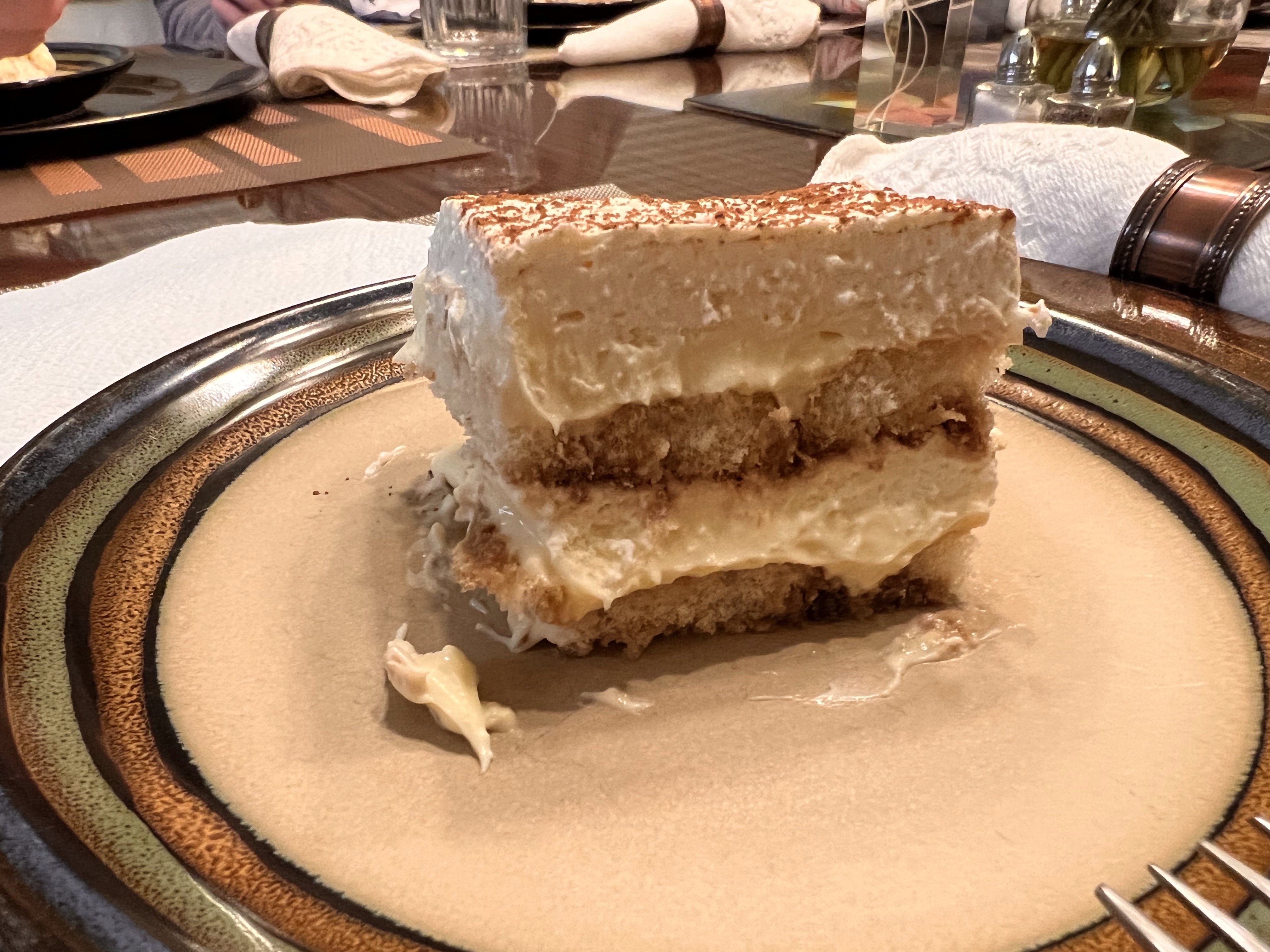
Back at home I whipped up a tiramisu for dessert while the men took a sledgehammer to a five inch shelf of ice covering half the driveway. Tiramisu is a process so, while the custard was cooling, I ran outside and helped toss chunks of ice. It was hard work, but a lot of fun, and really satisfying.
Dinner consisted of wild caught Alaskan salmon, sweet potatoes, and asparagus. And later we had the tiramisu for dessert. I like fish, but it’s not my typical “go-to” protein, but wild caught Alaskan salmon is a different thing altogether… so delicious.
The next day we left for home. It was a wonderful visit, and hard to say goodbye to our dear friends.
Oh! And we finally saw a moose… on the side of the road on our drive to the airport to head home.
We woke up on Tuesday morning to a frigid Alaskan morning. We dressed in multiple layers and climbed into our host’s four-wheel-drive Toyota Highlander and set out for Seward (pronounced like sewer with a ‘d’ at the end).
The road to Seward snakes along the Turnagain Arm of Cook Inlet before crossing through the heart of the Kenai Peninsula surrounded by the Chugach National Forest. Every turn looks like a postcard, it was hard to decide where to look.
We arrived in Seward with plenty of time before our cruise to head to the grocery store and get some snacks to pack with us. As a side note, grocery prices are fairly commensurate with NYC prices… so expensive.
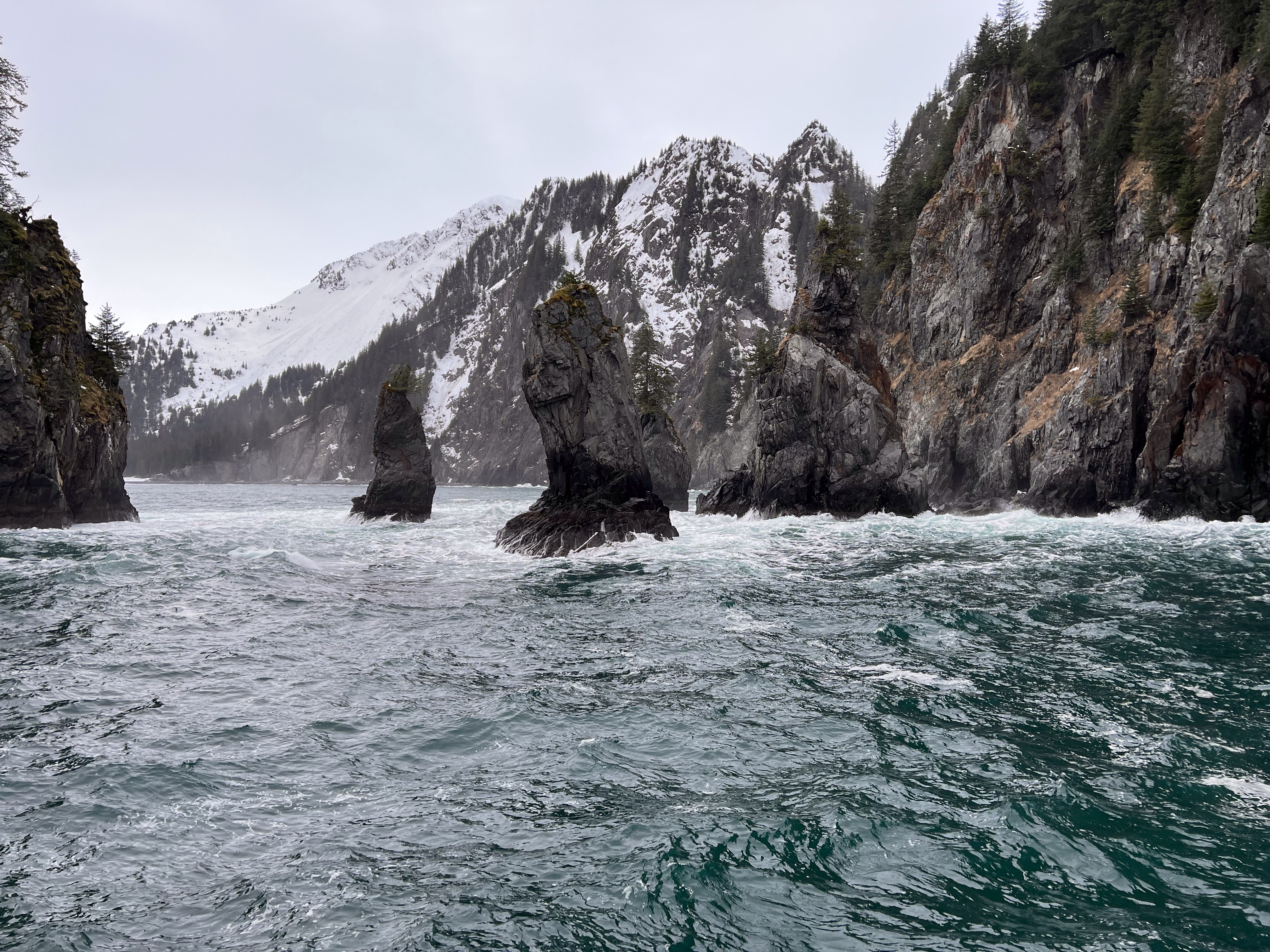
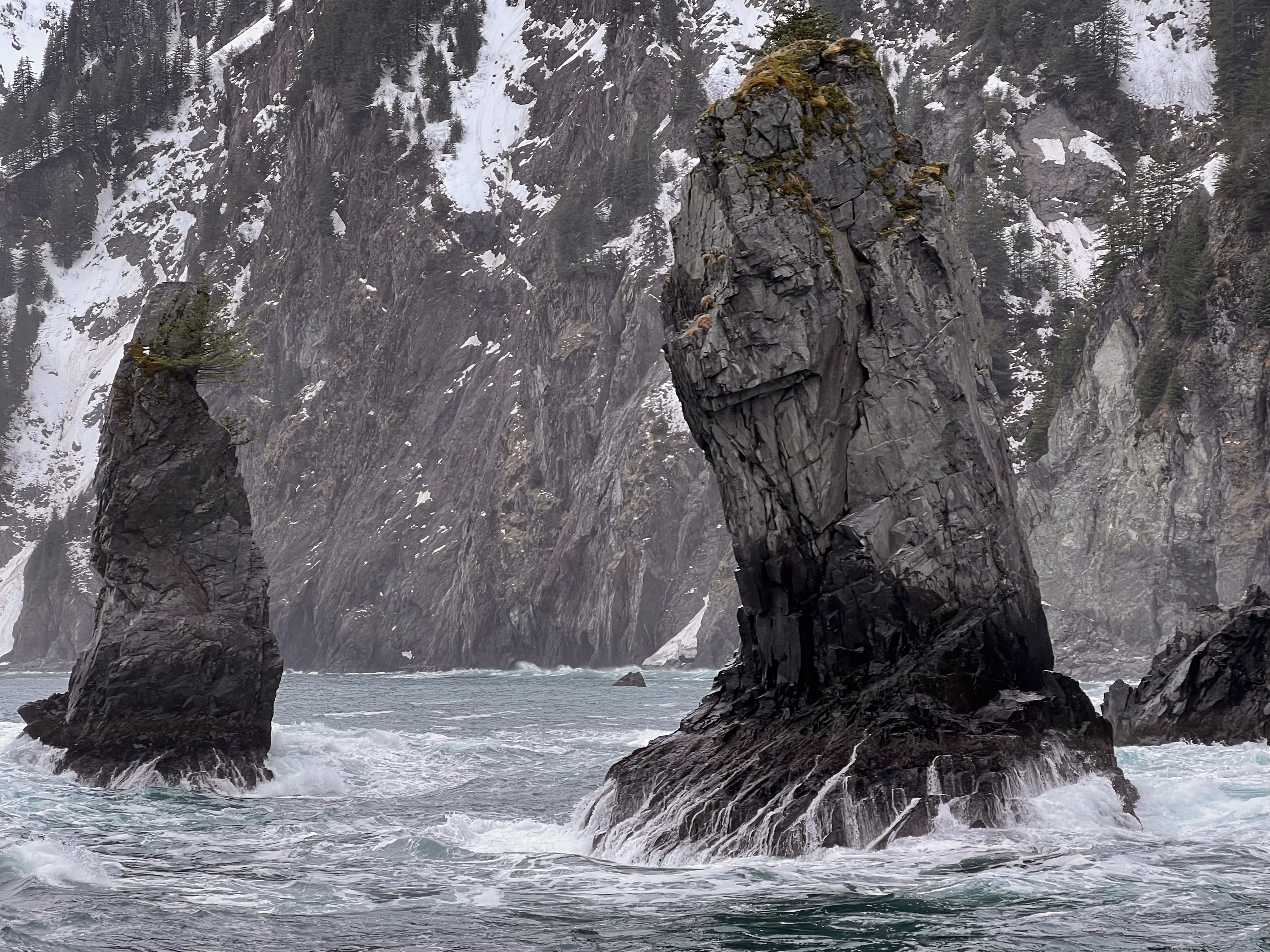
We took the Spring Wildlife Cruise around Resurrection Bay. We were hoping to see some gray whales, but alas, no luck. We did see bald eagles (fun fact: Alaska has the most paired bald eagles in the world), sea lions, otters, and seals. All of Resurrection Bay is a fjord, and we got to see several glaciers as well as icebergs in the distance.
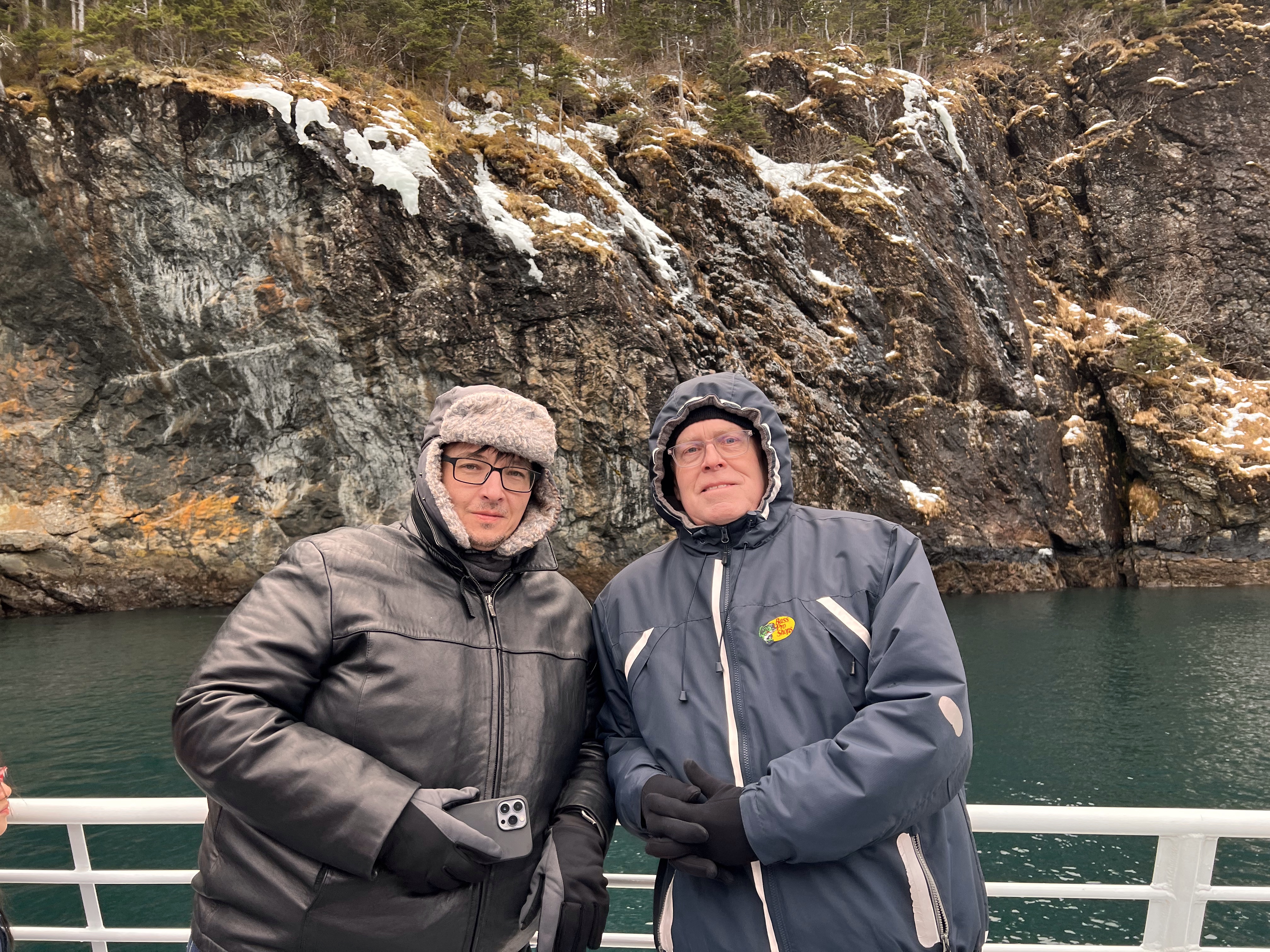
Gliding along the waters of Resurrection Bay felt like flying; the cold air was brisk and invigorating. For the most part, the ride was smooth and peaceful, but as we crossed the opening of the Bay the waters were choppy and sent the cruise boat bouncing over the waves. I had to stay on the outdoor deck to keep from getting seasick, and it was worth every freezing second. It was such a beautiful day, I wish I could experience it over and over again.
Turnagain Arm on the road to SewardResurrection BayThe Men enjoying the fresh airSea lions
Flying through Resurrection Bay
If you get the chance to visit Seward, the Major Marine Tours was awesome!
Lewis and I got to take a dream trip recently! So, let’s back up and explain how this trip was even possible. In January we flew to Seattle for Lew’s dad’s memorial (that’s a longer story and not really mine to tell), and on our way home American Airlines was offering 60,000 miles if you got their credit card, and there was no minimum purchase!
So, we got a new credit card, and bought something I already needed and got 60,000 miles. Which was enough to buy two round-trip tickets to Anchorage. And we just happen to have two dear friends that live in Alaska and they were willing to put up with us for four days.
We were excited to get on a flight that didn’t require us to get to the airport at 4 a.m. for the first time in awhile. So, 1 a.m. the night before our flight we got notification that our flight would be delayed, unfortunately this delay meant we would miss our connecting flight in Seattle. We tried to get put on an earlier flight, to no avail. So we had a six hour layover in Seattle.
Which was probably a good thing. I got terribly air sick and I needed the time to recover. Getting air sick is a new development for me. It has only happened one other time. I’m hoping it doesn’t happen again. I love flying and would hate to have to take Dramamine every time I fly.
We arrived in Alaska around 10:30pm, only 19 hours after we left home.
I’m going on a trip! A work trip. I’ll be leaving the country for the first time in almost two years. I have been hugely privileged/blessed in my adult life to be able to travel. This is the longest I’ve gone without leaving the country since Lewis and I got married.
I’m excited, but I’m also extremely nervous. I’m not particularly worried about getting sick (maybe I should be, but I’m relatively healthy, I’ve been working to build my immune system over the last two years, and I’m vaccinated), but I am worried about possibly being asymptomatic and getting stuck out of the country for quarantine.
But I’m going. Our flight on Friday is at 7:30am out of JFK into Miami for the weekend. We’re staying with Chuck and Mary Smith. Chuck is the Senior Pastor of the Caribbean. He frequently travels to Jamaica, Haiti, Trinidad, Tobago, Grenada, and the Bahamas; he also pastor’s the Ft. Lauderdale congregation. He’s a busy guy. I’m not quite sure how he does it all… but I do know that Mary does a lot to keep him going. We’ll spend the Sabbath in Ft. Lauderdale.
We fly out of Miami on Sunday morning for Freeport, Grand Bahamas.
Whenever I mention to people that I’m going to the Bahamas I get a wink-wink, nudge-nudge, and a “work” in air quotes. But I am legitimately going for work.
In 2019 Hurricane Dorian plowed into the Bahamas and made herself at home for at least 24 hours. It was intense, brutal, and devastating.
I coordinate for the Good Works program. Good Works is a program that United Church of God created to address emergency or unusual circumstances for church members. What it has turned into is the outreach program of United Church of God. We provide emergency relief after natural disasters, help orphanages, international camps, international church buildings, vehicles for pastors in international areas, and education and vocational opportunities for disadvantaged communities.
In 2019, when the hurricane hit, Good Works raised nearly $100,000 for relief. We were able to get emergency supplies (water, generators, tarps, bleach, flashlights, solar radios, water pumps, plugs and wires, and canned and dried foods) within two weeks of the hurricane (it wasn’t really possible to get there sooner since the ports were closed due to damage).
We sent a second shipment about two weeks later with supplies to help people begin to rebuild.
We were able to help all of our members (some in big ways, others in small) and with the remaining funds the members of our Freeport congregation set out to find people to help.
This was three years ago now, so we thought we’d head over to check on the status of recovery. This is the first time we’ve done a check like this. We typically rely on the local leadership to provide updates, but we wanted to create a video to share with all the people that helped make the recovery possible.
I really didn’t know what to expect from this book. I don’t read a lot of political books, and it’s been awhile since I’ve been into history books. But I’m attempting to expand my horizons. The title led me to believe it would be more dynamic than it was.
The title of the book really should be 11 Presidents that Screwed Up America, since one chapter, that I thought was supposed to be on Barrack Obama, also included George H. W. Bush, Bill Clinton, and George W. Bush.
But I digress. The author claims that adherence to the Constitution of the United States should be the ultimate metric we use to judge the success of a President. If a President enacts policy (even a truly moral policy) but does so in a way that circumvents the Constitution, then he has harmed the United States as a Republic. Basically, the ends do not justify the means.
So all kinds of Presidents end up on his bad list. This isn’t a Republican vs. Democrat argument. This is a constitutional vs. non-constitutional argument: Andrew Jackson, Abraham Lincoln, Theodore Roosevelt, Harry S. Truman, Franklin D. Roosevelt, Woodrow Wilson, Lyndon B. Johnson, Richard M. Nixon, Barrack Obama (with a shout-out to Clinton, and both Bushes) all, in the authors estimation, trampled on the constitution. It doesn’t matter if they also did good things, they hurt the office of the Presidency by expanding it’s powers beyond what is given in the Constitution.
The book is BORING! I was so bored. But, there was tidbits of interesting information. The author does a good job of explaining exactly what each President did to violate the constitution, and how it laid the groundwork for further abuses by the office of the president. I think it helped me better understand how the founders intended for the three branches of the government to work together.
I’d give it 3.5 out of 5 stars. The writing is adequate. The information is good. The subject matter is so boring.
Our half cross-country road trip was leading us to an epic adventure. I’m only just now getting around to writing about it because on the adventure we had no access to internet… it was glorious, plus life has been a little hectic since then. Now for the first two days!
On Sunday, 12 July we headed to northern Minnesota. Our first stop was actually the airport so we could pick up another adventurer, flying in from California, but after that our first stop was in Orr, MN.
Orr is called the “Gateway to Voyageur’s National Park,” and has a population of 267 (as of the 2010 census). I’d hazard to guess that most people have never heard of Orr, MN, but the town stands as a bastion of epic proportions in my childhood memories, though I had never stepped foot in it until three years ago. My former church used to own a summer camp in the town, it was a right of passage for thousands of teenagers during its existence. Part of that long ago history is the Kielczewski family; two of the daughters were our primary hostesses for the first two days of our adventure. The Erickson family (one daughter of the Kielczewski family) allowed us to stay in their newly constructed farm house as a base camp for the first night of our adventure. I’m told this new home will be listed on Airbnb, and if it ever is, I will definitely add a link here, it’s a truly beautiful home. And our hosts were wonderful. It was here that all of the participants gathered for the first time. We had a lovely meal, a Bible study, team building activities, and training in the basics of canoeing.
The participants and our wonderful hosts
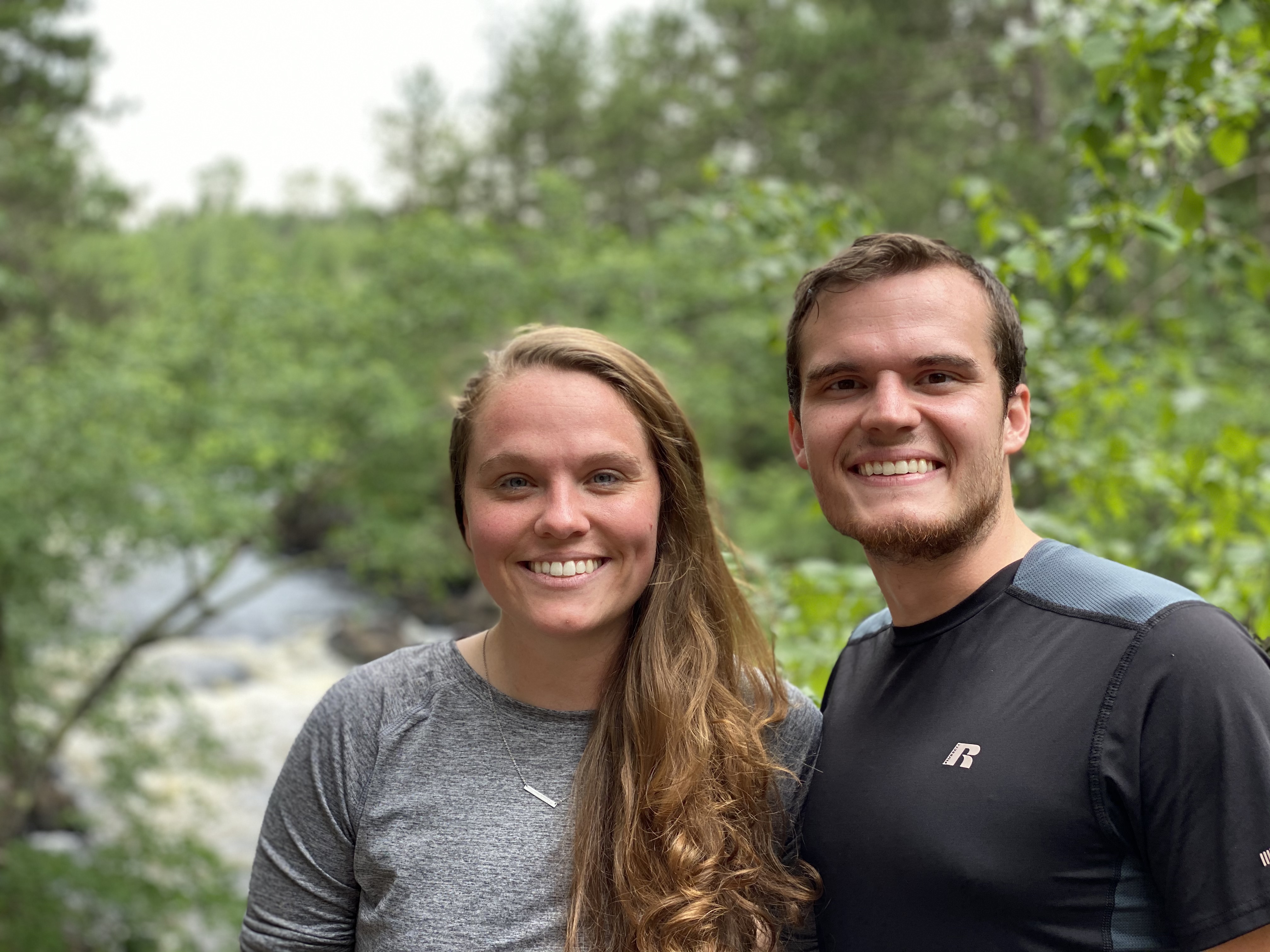
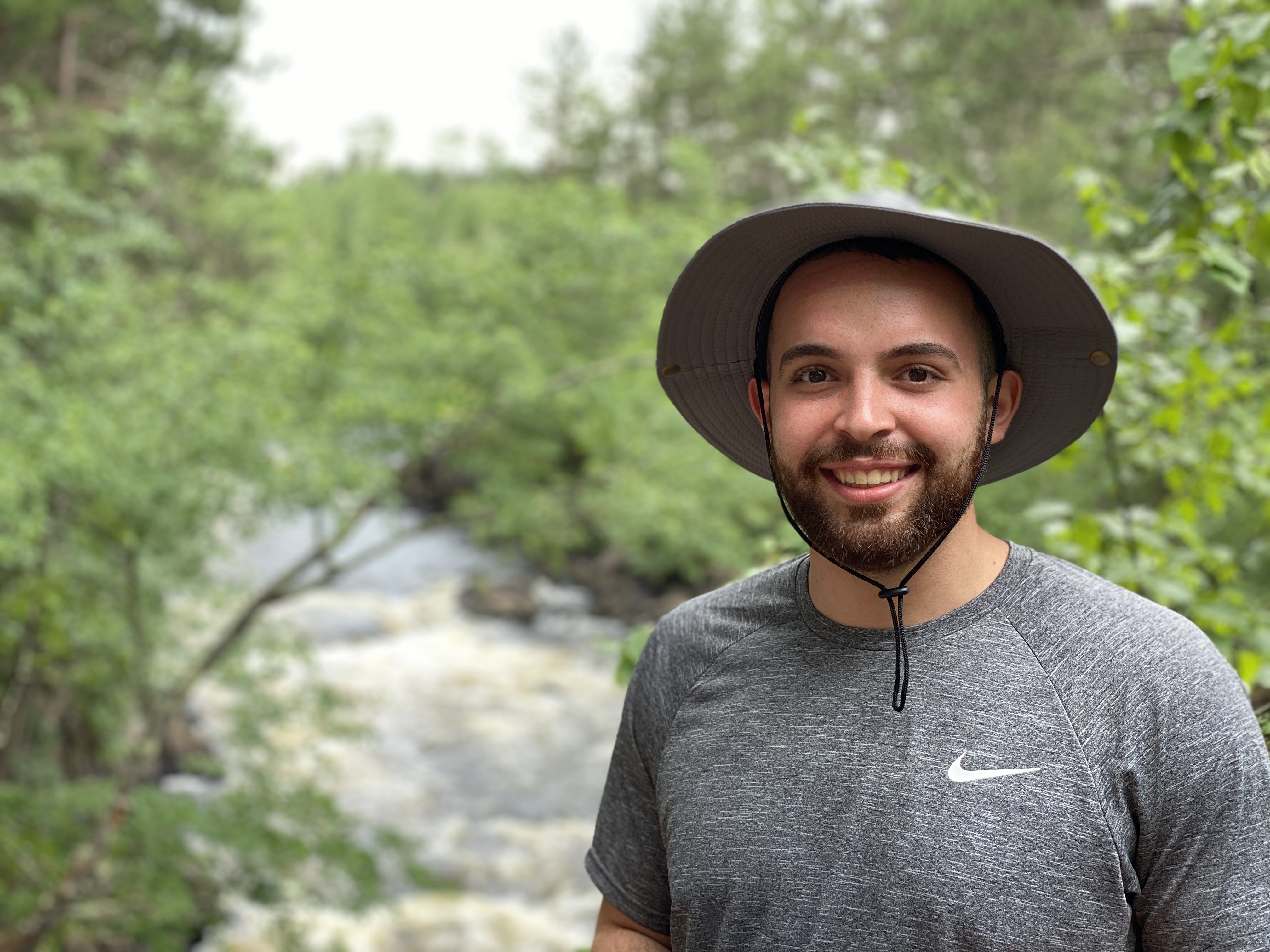
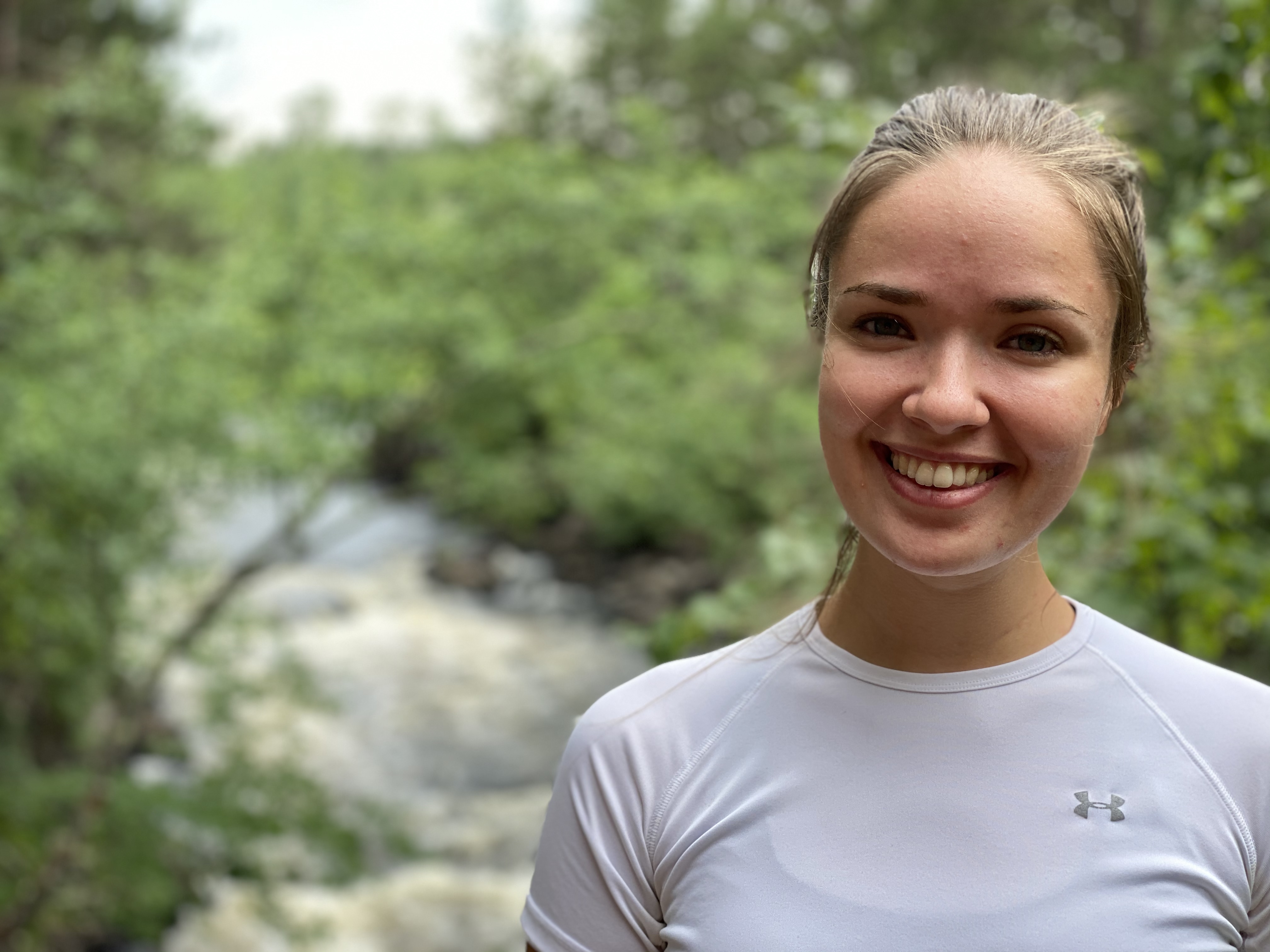
On Monday, 13 July, we headed to Anderson’s Canoe Outfitters. They provided us a place to set up camp for the night and all of the canoes we rented (save one). In the afternoon we all gathered on the shore of Crane Lake and headed out on a brief excursion. This would give us all a chance to practice our paddling and get comfortable on the water before we headed out for the main adventure. On this excursion we headed to the Vermillion Gorge Trail. It’s a fairly easy canoe trip to the Gorge (only one canoe capsized and it was only slightly traumatic for the occupants), and the view of the gorge is lovely. I was the unofficial portraitist as we looked over the gorge.
We made it back to our campsite at Anderson’s just in time for a thunderstorm. We spent the rest of the evening sorting gear, shuffling foodstuffs, trading out tents, and avoiding mosquitoes.




















 L & L Shenanigans