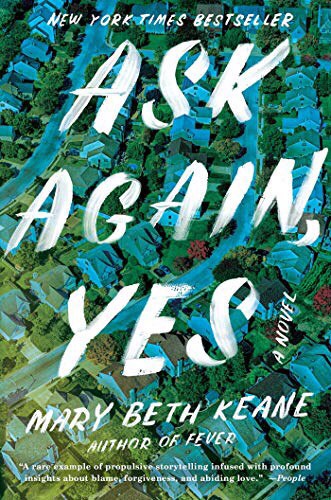
This book is a sweeping tale of two generations of two families deeply intertwined. Kind and steady Francis Gleeson (an Irish immigrant) joins the NYPD and marries Lena (a New Yorker born and bred) and moves to the suburbs. Brian Stanhope, another NYPD cop moves in next door with his beautiful and troubled wife, Anne (also an Irish immigrant). These two couples start their families side by side, but their lives become inextricably combined, while simultaneously blowing apart.
Okay, when I say sweeping, I mean sweeping; and not just because it takes place over a 30-year span, this novel explores so many themes I’m still processing what I heard several days later. It tackles themes of family, abuse, mental illness, addiction, resilience, home, forgiveness, love, and redemption.
And even though the themes are heavy, it was written with such deftness that you don’t feel weighed down by the weight. Because, at the heart of it all, there is hope.
The characters are complicated, and flawed, and even in their brokenness, you love them. I grieved with them, I rejoiced with them, and I hoped with them.
Clearly I loved this book… I was late for work twice last week (Okay, I make my own schedule, but I was late for when I wanted to start work) because I got lost in the narration of this book, I didn’t want to stop listening.
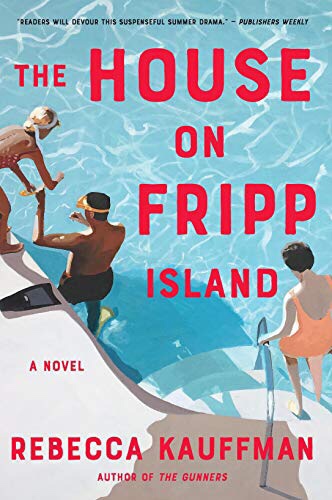
I liked this story. I liked the characters. The story follows two families: the mothers grew up together, but ended up leading drastically different lives. One of unhappy wealth and privilege, the other stressful, but overall happy in the grips of poverty… not living on the streets poverty, but working hard but still being on the brink poverty.
These two drastically different families come together to share a vacation for one week, when tragedy strikes, and someone dies. The description of the book would have you believe that the novel is about the aftermath of this tragedy and how each member copes, but that’s not really true. 85% of the book is spent on the vacation; the remaining 15% deals with the aftermath. And it doesn’t do it justice.
This novel had such promise. I wanted to know more about the killer. I wanted more on how the families coped after the murder. I wanted to hear their inner dialogue. I wanted to know how they processed through everything, but the author just glides through it so quickly.
Are you looking for a deep and artful look at family, trauma, and the power of redemption? This is not the book for you. If you’re looking to be entertained for a few hours over a little mystery, then you’ve come to the right place.
There’s something not quite right on Gull Cove Island, and three estranged cousins are going to figure it out. If you’re like me you’ll have it mostly figured out within a few pages of the cousins’ arrival on the island, and you’ll spend most of the book shaking your head at them not figuring it out. There was one surprise that I didn’t actually see coming, but it happens early on in the story, so you don’t have to stick around forever for it.
The writing is adequate, the characters are only mostly one dimensional, and the “mystery” is not that mysterious. But I wasn’t bored reading it.
Is this my new bar? I wasn’t bored? Where’s a good meme to describe how I’m feeling when I need it?
When I checked this book out at the library, I did not realize that it was a sequel. It can, more or less, stand alone, but there is definite character development that you miss out on by skipping that first installment. All that said, I liked it enough to want to go back and read the first one.
Highbrow literature this is not, but if you like a good melodrama/soap opera-y romp; this is definitely the book for you.
The story is engaging. The writing is sufficient; the dialogue flows well; the characters are lively. There is romance, but thankfully it stops short of being salacious.
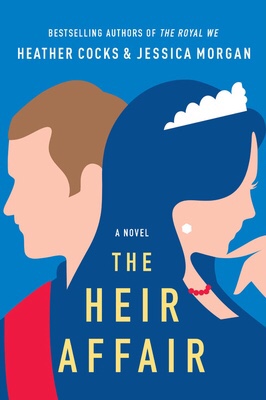
So, about the story. The novel follows the story of Rebecca “Bex” and her prince of England husband, “Nick.” The novel starts with Nick and Bex hiding out in Scotland shortly after their wedding. Why are they hiding out? If you had read the first novel you likely would have known why, but you find out later in this novel that they are hiding out from a scandal that broke during their wedding. It follows them through several years as they navigate their roles as royals and as husband and wife.
I’m a sucker for melodrama, so I really enjoyed this book. I look forward to reading the first installment… and if there are ever any more installments, I look forward to those as well.
4/5 stars because I enjoyed it, and I would read additional installments.
I just finished this book like five minutes ago, and I’m still processing. Seriously… what did I just read?
First, I really liked this book. It was well written; the story is compelling, the characters are interesting, and it’s faced-paced.
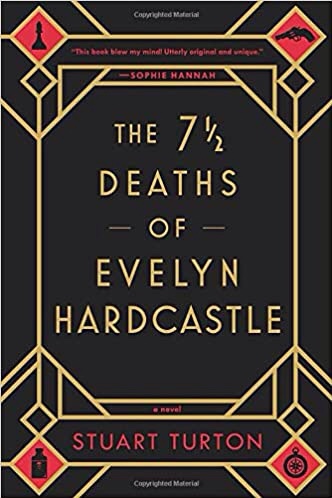
I love a good mystery. And I was interested in reading this because it had an art-deco feel. Nothing in the description mentions the early 1900’s, but that’s the feeling I got from the cover and the description. And I’m not an aficionado of murder mystery novels, but in my mind the early 1900’s (up until the 1930’s) is the golden-age of mysteries.
And this is a good mystery. Be forewarned that this book is surprisingly bloody. The author doesn’t dwell on it; and he’s not terribly descriptive of the gore, but body count is shockingly high. If you’re particularly sensitive to suspense (I’m not), maybe don’t read this just before bed.
This book follows Aiden Bishop as he seeks to find the killer of Evelyn Hardcastle. The mechanics of why and how he is doing this is part of the mystery, all you know at the outset is that Aiden is stuck in a loop of a single day from the perspective different people witnessing the same events unfold.
The amount of detail the author is able to weave into this story from so many different perspectives is truly impressive; I can’t imagine the amount of outlining he had to do to keep all the storylines straight.
One of the things I love about a good mystery novel is trying to figure out the answer, and usually figuring it out before the end; it makes me feel smart. This one made me feel like an idiot. I had no idea where any of this was going and where it finally wound up. That’s partly because there are really three mysteries in this story: who killed Evelyn? Who killed her brother all those years ago? Why is Aiden stuck in this loop?
And I never figured out any of them. Not a one.
The only thing I would change about this book is I would have liked a bit more explanation regarding what happens if Aiden ever escapes this loop. Where does he go? Who is he? What does he do? Unfortunately you never find that out.
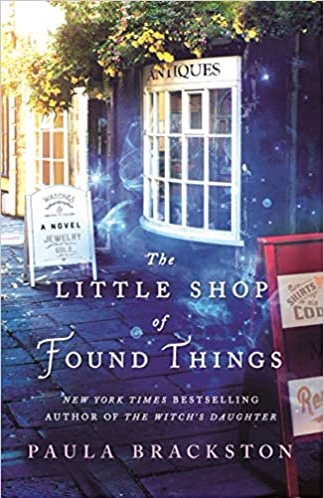
Finally! As I mentioned in my last blog I was currently reading three books, so I finally finished one. When I read the jacket of this book, I thought, ooh, fun, a time travel book. I haven’t read many time travel books, but it sounded intriguing and I was looking to step outside my reading niche.
I was a little disappointed that it had ghosts; I’m not a fan of ghost stories, but (thankfully) that was a pretty small part of the story. I also didn’t realize that this was just one in a series of books; while I enjoyed this book, I’m not sure I liked it enough to invest more time in the series.
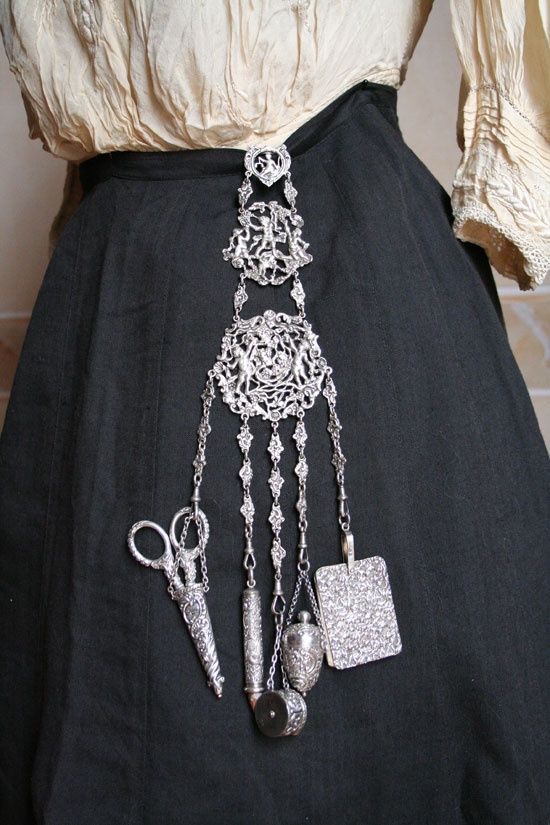
The rundown is this: a young woman (Xanthe) has the ability to “hear” objects, specifically she can hear objects that have a story to tell about their previous owners. She doesn’t hear words, but they sing to her or vibrate, or something like that. It is this ability that draws her to a particular piece (a chatelaine) — I had never in my life heard of a chatelaine, so of course I looked it up. It was a basically a decorative tool belt for women used during and prior to the Victorian era (I’ll post a photo below).
So anyway, this chatelaine calls to her… turns out it’s somehow connected to a ghost that threatens her if she doesn’t help her daughter… in 1605. So Xanthe takes up the ghost’s daughter’s cause (because that’s not confusing) and travels back in time. Shenanigans ensue. I won’t spoil the book any further by detailing said shenanigans, you’ll have to read it yourself to find out exactly what they are and how they play out.
I liked this book. It was generally lighthearted, somewhat of a mystery (though I didn’t find some of the resolutions totally satisfying), with just a hint of romance for good measure. The writing itself was good; although I find that to be so subjective (for example, I, very typically, love Jane Austen. However, my extraordinarily well-read friend, Katherine, cannot stand Jane Austen). So when I say a book is well written, what I mean is that the story makes sense; there aren’t a ton of overtly glaring plot holes; the grammar is fine; it’s written well regardless of how I feel about the story… wowee, I am off on some tangents today.
Back to the subject at hand… For a book that switches back and forth between modern times and 1605, I think the continuity of the storyline was pretty good. I understand the concept of time travel, but I was a little perplexed by some of the logistics of it as it plays out in this book’s universe. For example, if she (Xanthe) is able to travel through time, why is she limited to a linear progression in the 1605 timeline that she enters? Why does she always return later in the timeline rather than just return right when she left? And why is there such urgency from this dang ghost when all of this has already happened?
Anyway, I don’t think the characters are as well developed as they could be, but, since this is a series, it’s possible (hopeful??) that the author would flesh them out more in the following books.
Overall I would recommend this book for an escape from reality with some lighthearted fare. And who can’t use a little bit of an escape from the dumpster fire that is 2020, am I right?
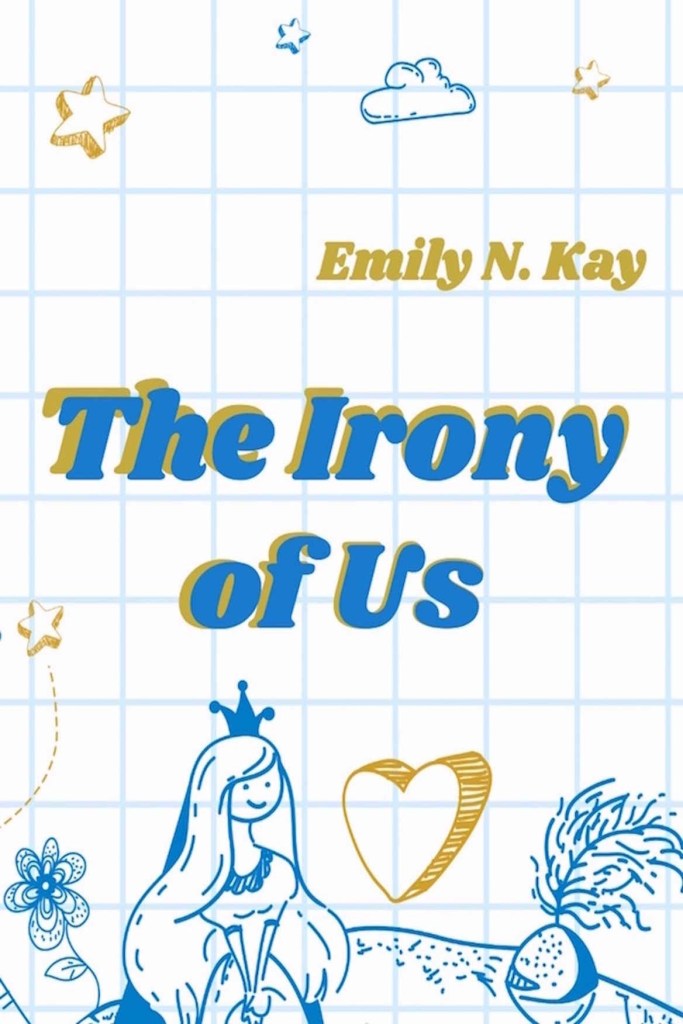
Where to start? This book sounded like a great YA lit book, and in many ways it was. It has the right elements: teenaged angst, a love triangle, gratuitous cursing, a coming out, and a prom. But honestly, this book is bad. I mean the story is fine: two best friends, having known each other since birth, struggle to navigate friendship and relationships as they have disparate interests and friend groups during their junior year; they have conflict, they sort of resolve their conflict, they grow as people, sort of.
Here is where I struggle with this book. First, the author comes very close to the two main characters growing as people, there are glimpses of Stella and Marie recognizing why they are struggle in their relationships, but they never quite get there; there’s almost and epiphany, but not quite. Secondly, and I’m not sure if the author isn’t a native English speaker or not, or she just had a really bad editor, but the grammar is terrible. The author switches between tenses (mixing present and past tense in the same sentence), she would often use the wrong form of the verb, and sometimes she would just use the wrong word altogether, for example, throughout the entire book she uses the word corporate when she meant cooperate. I’m not entirely unconvinced that this wasn’t written entirely by a bot.
If you don’t care about grammar or vocabulary, then this might be the book for you; otherwise, it’s really not worth the time; which is unfortunate, because the story has such promise.
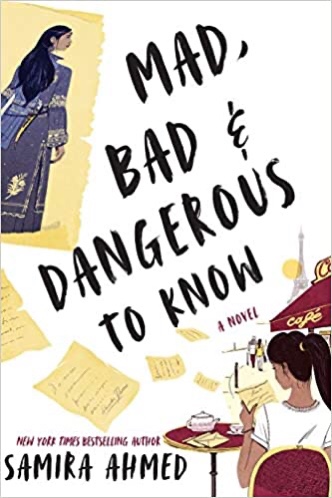
The book follows the story of two young women, Khayyam (an American of French and Muslim-Indian parents) in modern day France (where she spends her summers) and Leila (a Muslim from the Ottoman Empire) crisscrossing from Turkey to England to France.
Khayyam is an aspiring art historian, the child of multi-cultural academics, she is an over-achiever, slightly quirky, and filled with self-doubt and angst. While not wanting to be defined by her relationships with men, she spends a lot of time (like many teenaged girls) obsessing over boys. Do they like her, why don’t they like her, how can she make them jealous, will she ever understand them? She’s also angry. Angry at men, angry at history, angry at white people. While she vacations in Paris and eats pastries.
Leila on the the other hand, is the concubine of the Pasha. Given literally no choice and no freedom, she makes the dangerous decision to take a lover (a Christian, her Giaour, an infidel). Both pay a hefty price for this betrayal. Unfortunately, there isn’t much more to reveal of Leila without spoilers, and what remains is rather scant anyway.
The author does an excellent job of revealing Leila’s story in bits, unfolding like a mystery through the discoveries that Khayyam makes in the modern day. Unfortunately, because of the belabored point that Ahmed is making with this novel, Leila’s story feels unfinished and I believe short-changed. Which brings me to my biggest complaint about this novel. The point that Ahmed wishes to get across is that there are marginalized people throughout history, and there is little doubt that women are the most marginalized, especially women of color.
I don’t dispute that there are marginalized groups of people, or that women often take the brunt of this silencing. What I do take umbrage with is the manner in which Ahmed makes this point. Belabored isn’t strong enough, hammered does slightly more justice, perhaps the two combined is the best way to describe it.
Ahmed is clearly a talented writer, but this novel lacks any subtlety or beauty in craft. The point that women have been marginalized can be made through story-telling, it can be made through the choices the characters have to make… does it need to be shouted at the reader over and over and over and over again? It’s as though the author doesn’t believe her audience is smart enough to understand the point she is trying to make. But, I get it.
We all get it.
I found it more of a distraction from what could have been a very effective and beautiful novel.

 L & L Shenanigans